Audio Guide
Listen to this page
From the Grande Rue de Pera to Istiklal Avenue
Istiklal Avenue is the roughly 1.4-kilometre urban spine between Taksim and Tunel squares. Known in the nineteenth century as the Grande Rue de Pera, it grew around embassies, Levantine residences, theatres, arcades and modern shops, becoming one of the clearest expressions of late Ottoman Istanbul's engagement with Europe.
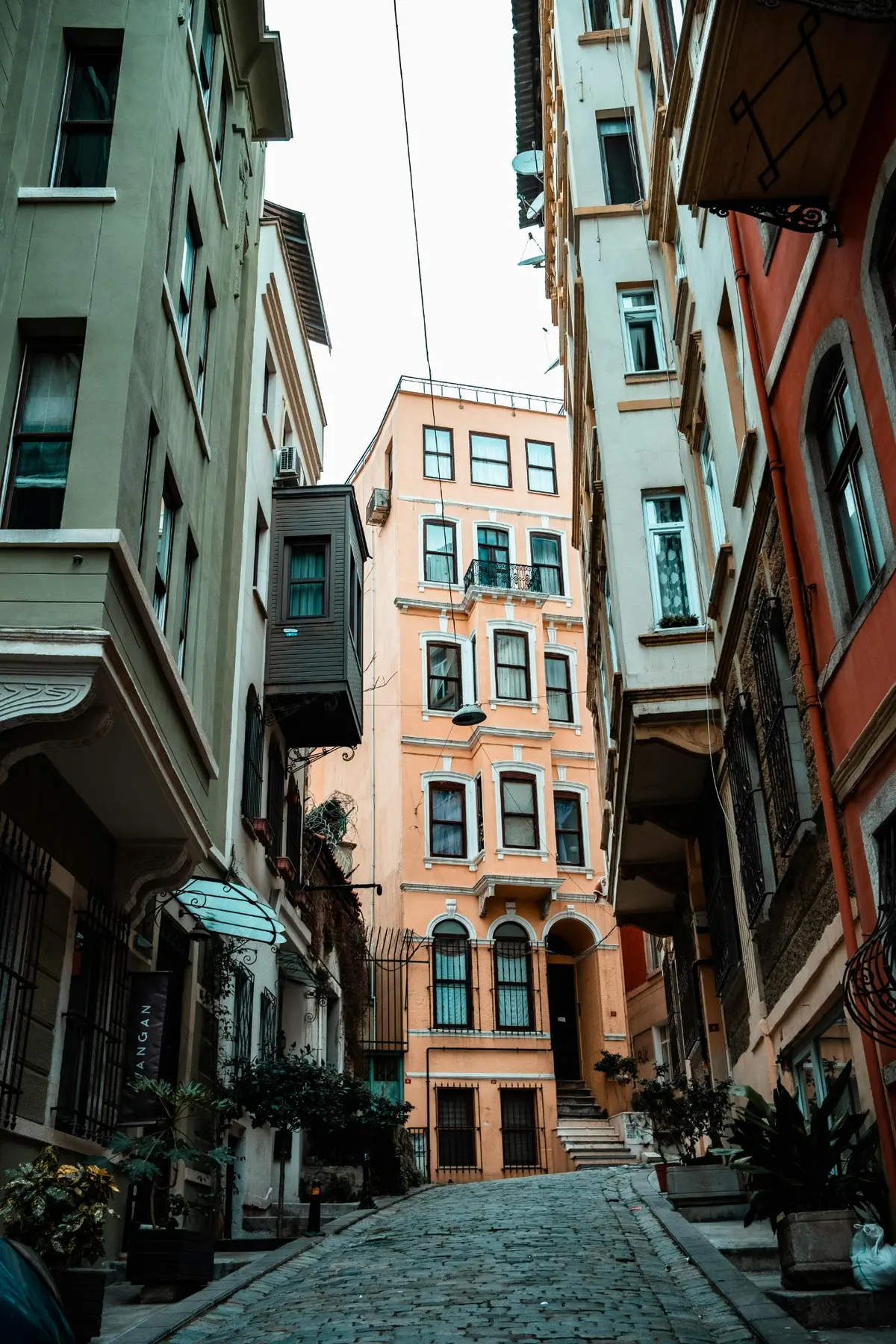
Renamed after the establishment of the Republic, the avenue became a pedestrian zone in 1990. Its value lies less in a single monument than in the accumulated streetscape: apartment facades, places of worship, consular buildings, cinemas and passages from different periods stand side by side.
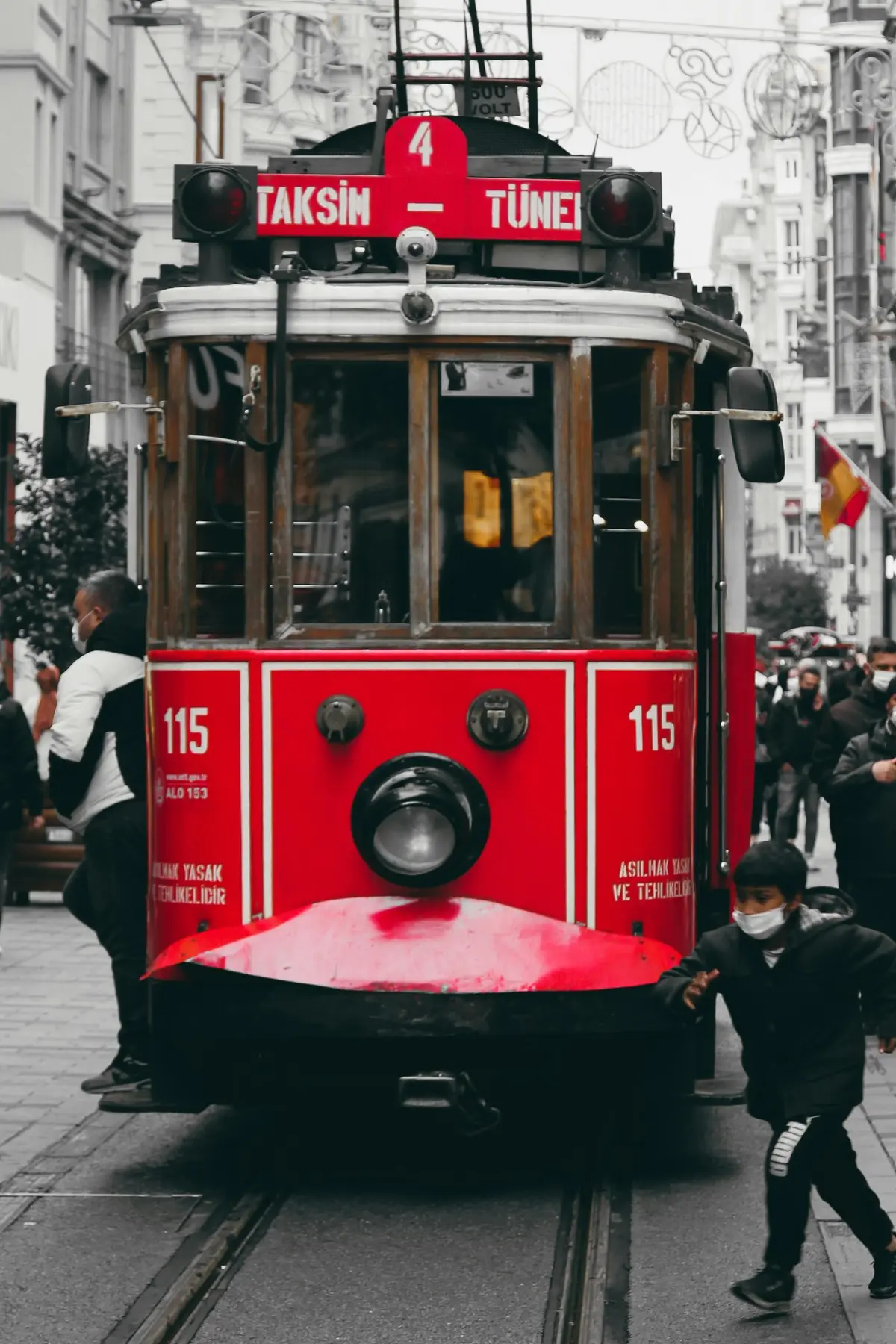
The Nostalgic Tram and the Avenue's Changing Rhythm
The red T2 heritage tram runs along the centre of the avenue between Taksim and Tunel. Revived at the end of 1990 to recall Istanbul's former electric trams, it remains a working short-distance transit line as well as a city symbol. Keep the rails clear and listen for the bell when crowds are heavy.
The avenue changes through the day. Mornings are best for facades and architectural detail; shopping and cultural traffic build in the afternoon, while restaurants, taverns and music venues dominate at night. Side streets toward Cihangir, Cukurcuma, Asmalimescit and Galata offer a quieter counterpoint.
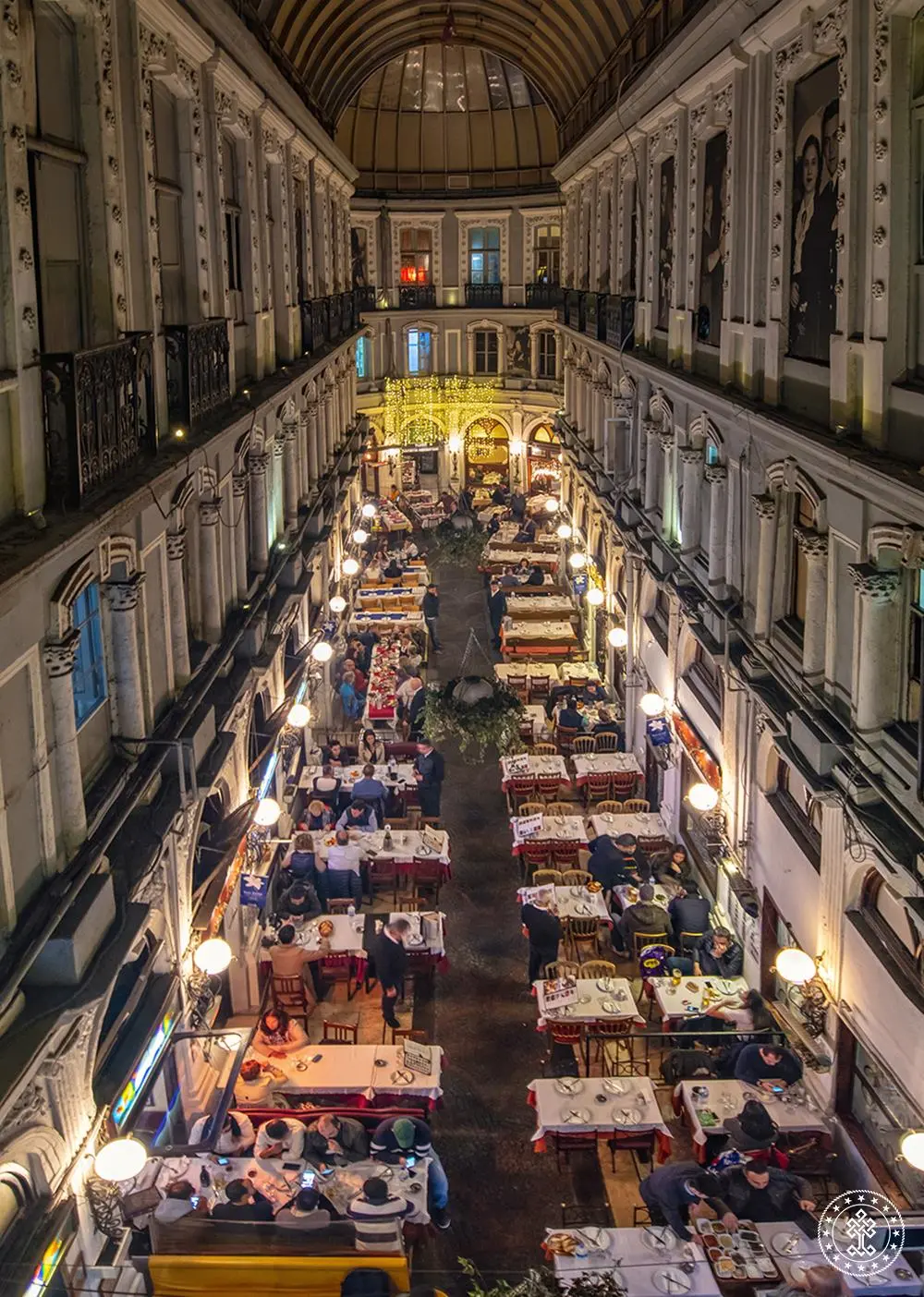
Arcades, Theatres and Late Ottoman Facades
Cicek Pasaji occupies the site of the Naum Theatre, lost in the Great Beyoglu Fire of 1870. Hristaki Zografos replaced it in 1876 with the Cite de Pera, a tall glass-roofed internal street lined with shops. Flower sellers later gave the passage its present name; restaurants and taverns now animate its ornate interior.
Hazzopulo, Atlas and Avrupa passages show different ways commerce and entertainment moved inside the urban block. Neoclassical, Gothic Revival, eclectic and Art Nouveau details often meet on the same frontage. The Cercle d'Orient building and the reconstructed Emek Cinema also preserve the memory of Beyoglu's performance culture.
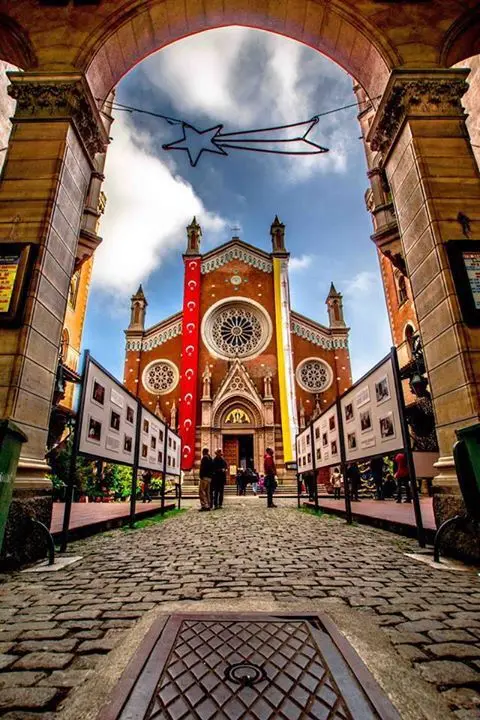
Churches, Inns and a Layered Beyoglu
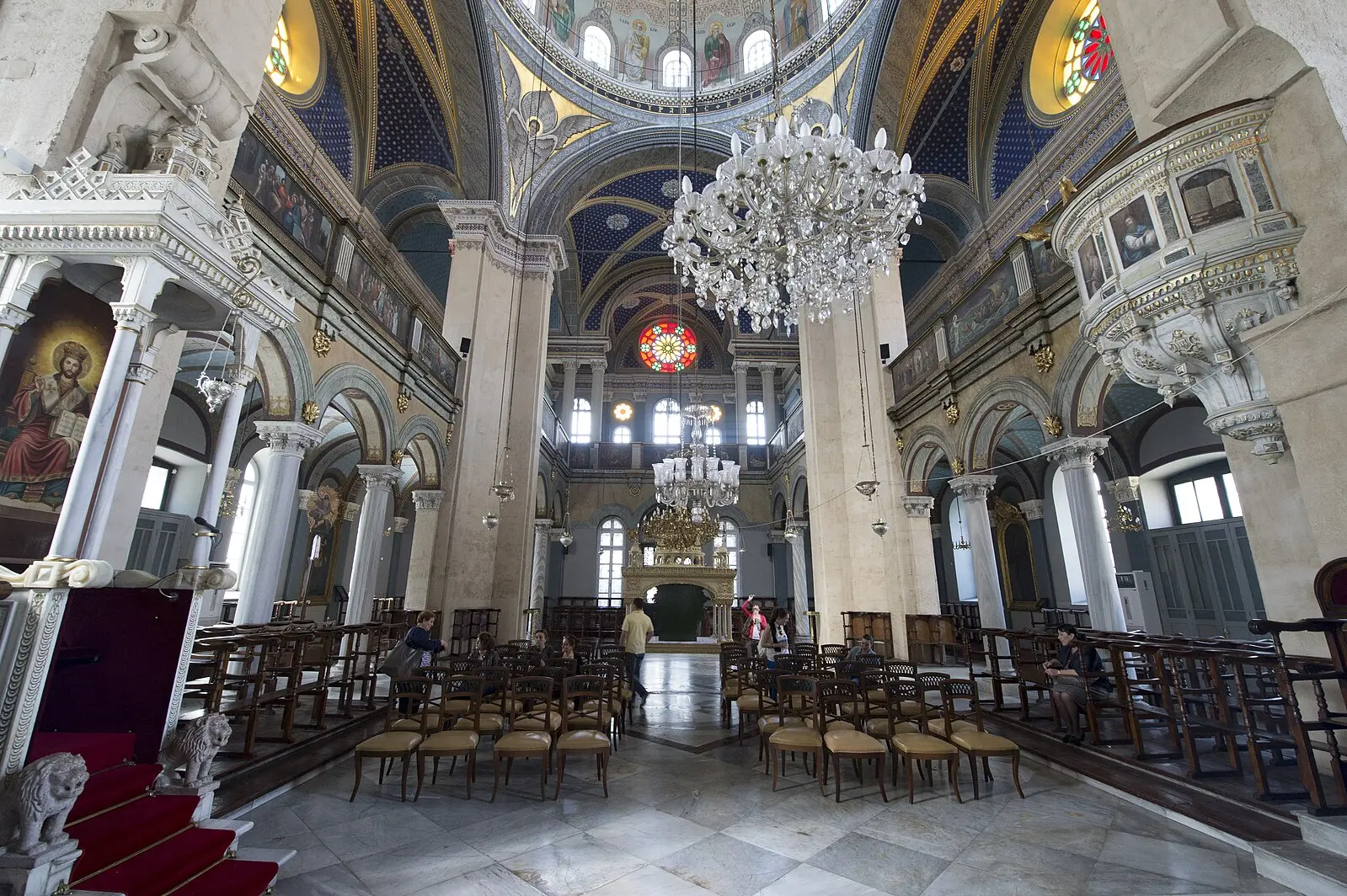
St Anthony of Padua is one of the avenue's strongest architectural stops, with a red-brick Gothic Revival facade set behind a forecourt. The present church was designed by Giulio Mongeri and built between 1906 and 1912. Near Taksim, Hagia Triada Greek Orthodox Church opened in 1880; its twin bell towers, dome and rich interior signal the public presence of non-Muslim communities in the late Ottoman city.
Narmanli Han was built in 1831 for the Russian diplomatic mission and later became a courtyard complex of homes and artists' studios. Farther downhill, the Galata Mevlevi Lodge, founded in 1491, reveals an older layer of the district. Diplomacy, worship, trade, art and Sufi history meet within one walk.
How to Plan the Walk
A direct walk takes roughly 25–35 minutes, but allow two to four hours for churches, passages and museums. For an easier downhill route, take the M2 metro to Taksim and walk toward Tunel. Finish with the historic F2 funicular to Karakoy or continue down Galip Dede Street toward Galata.
The avenue itself is open and free, but churches, museums, cinemas and exhibitions keep separate hours and ticket rules. Check official pages for paid stops such as the Galata Mevlevi Lodge. Demonstrations, major events and security measures can temporarily affect access to Taksim and suspend T2 or F2 services.
Visitor Information
- Admission: The avenue is free and always open; museums, exhibitions and private venues may charge separately.
- Time: Allow 25–35 minutes for a direct walk or 2–4 hours with stops.
- Transport: Use M2 Taksim for the north end and the F2 Beyoglu–Karakoy funicular for the south end; connect from T1 at Karakoy.
- Tram: T2 Taksim–Tunel accepts Istanbulkart and may pause during major events or security measures.
- Care: Watch belongings in crowds, keep off the tram rails and expect steps in some historic buildings.