语音导览
收听此页面
地下水宫
水、大理石与罗马工程在地下构成安静而震撼的空间。
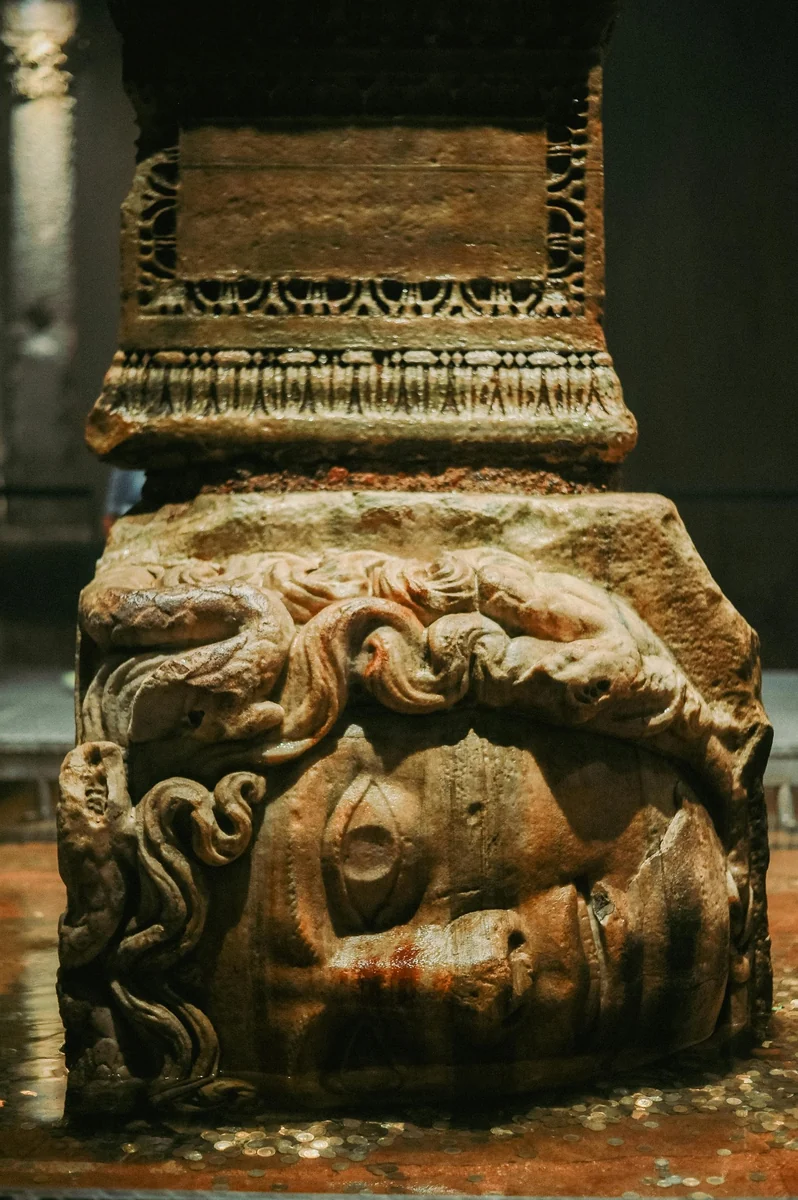
The Basilica Cistern was built in the 6th century under Justinian I to supply the imperial district. Its 336 reused marble columns, Medusa bases and dim reflections make it one of Istanbul's most memorable interiors. Visits are paid; check the official ticket channel for current hours and pass rules before going.
Basilica Cistern: Istanbul's Silent Underground Palace
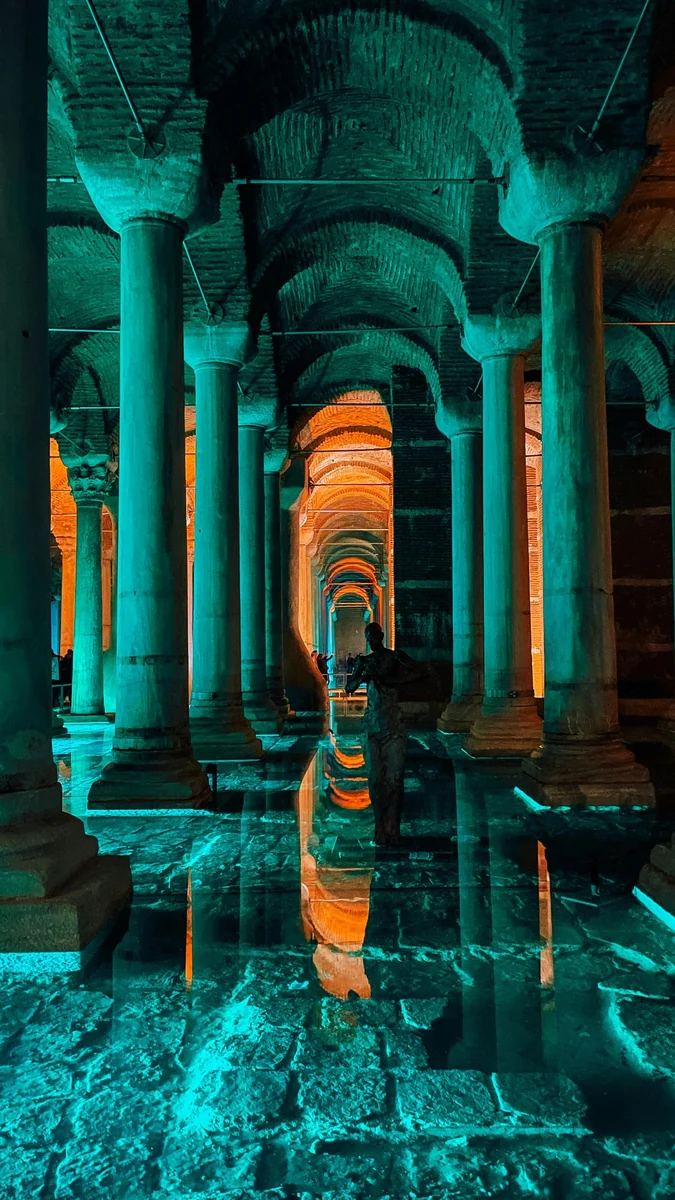
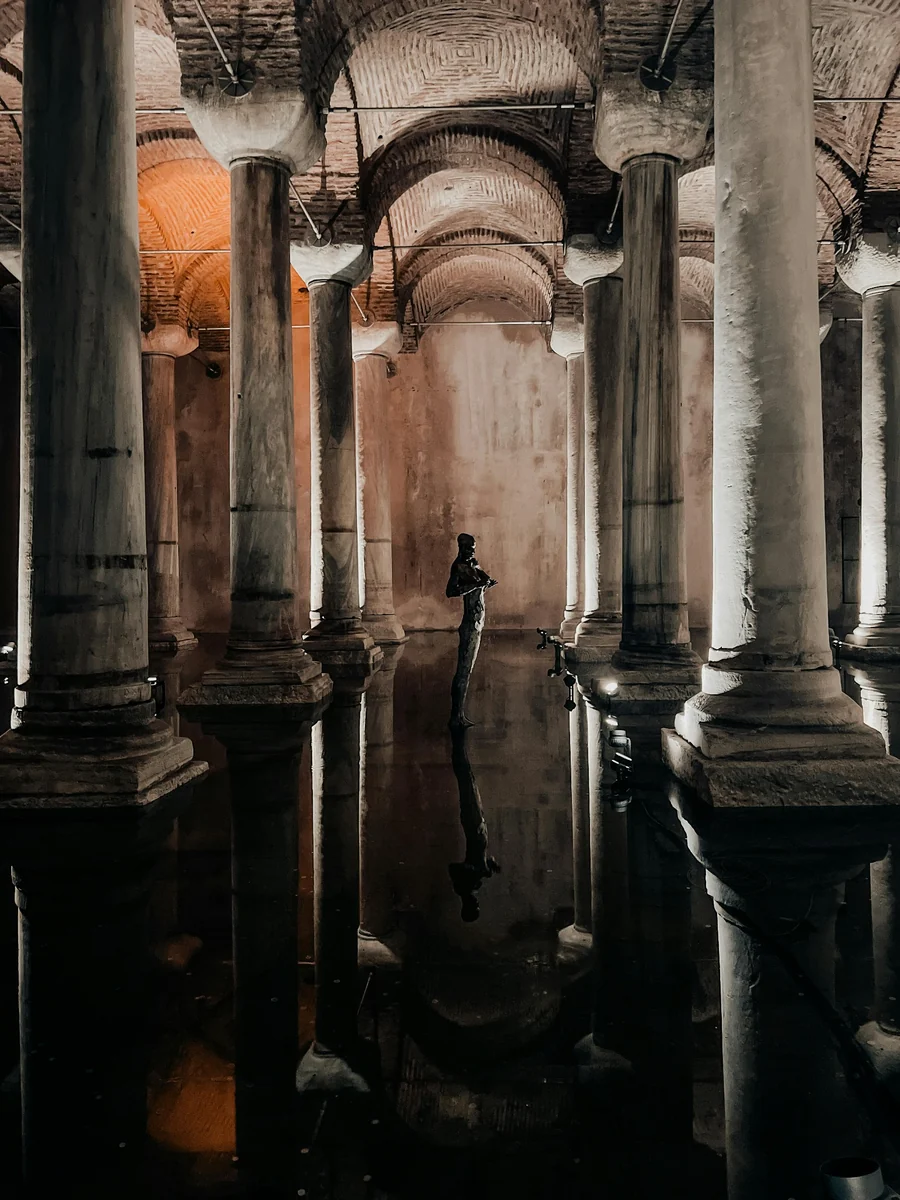
A few steps from Hagia Sophia, below the busy streets of Sultanahmet, another Istanbul begins. The Basilica Cistern is not just an old water reservoir; it is one of the clearest places to feel the engineering mind of Byzantium, the visual language of Rome, and the layered memory of the city at the same time. As soon as you descend, the noise of the street disappears. Reflections move across the water, marble columns repeat into the dark, and the whole space feels almost theatrical.
What makes the cistern unforgettable is not only its size. It was built as infrastructure, but the reused ancient columns, different capitals, raised walkways and controlled lighting have turned it into one of Istanbul's most atmospheric interiors.
A Monumental Water System from Justinian's Istanbul
The cistern was built in the 6th century during the reign of Eastern Roman Emperor Justinian I. Its purpose was practical and strategic: to supply water to the Great Palace and the surrounding imperial district, and to keep the center of the city secure during shortages or sieges. Measuring roughly 138 by 64.6 meters, it could store about 80,000 cubic meters of water.
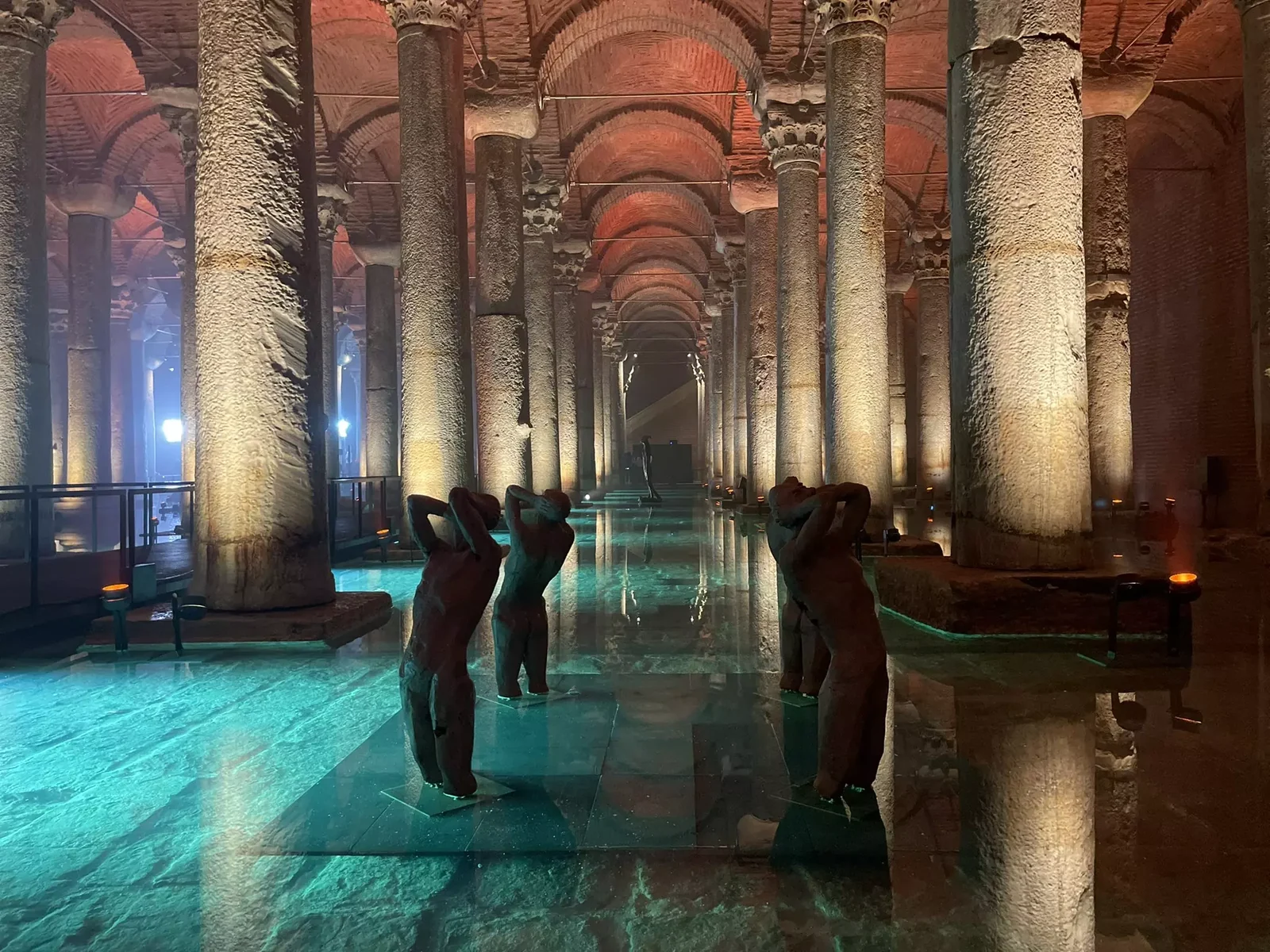
The ceiling is carried by 336 marble columns arranged in 12 rows. Most of these columns were brought from earlier buildings, which is why the interior never feels uniform. Corinthian and Ionic details appear side by side, giving this utilitarian structure an unexpectedly rich architectural rhythm.
The Medusa Heads and the Tear Column
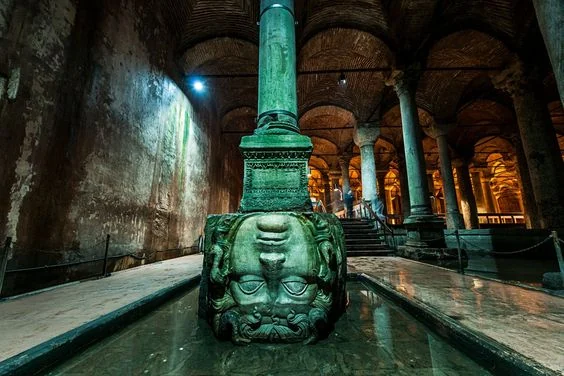
The most famous corner of the cistern is the pair of Medusa heads used as column bases near the far end. One is upside down and the other is placed sideways. No single explanation is certain. Some say the positions were meant to neutralize Medusa's petrifying gaze; others see them as practical reused blocks chosen for the correct height. That uncertainty is part of their power.
The Tear Column is another detail visitors stop for. Covered with eye and drop-like motifs, it stands apart from the other columns and is often connected in local memory with the labor and suffering behind the construction of the cistern.
Visiting Today
Today the Basilica Cistern is visited on walkways above the water, with lighting and occasional exhibitions shaping the experience. Most visits take 30 minutes to an hour, but photographers and slow travelers should allow more time.
Tickets and hours: The cistern is a paid museum site. Opening times, ticket categories and pass rules can change, so check the official sales channel before visiting. Early morning and evening visits are usually more comfortable in busy seasons.
Istanbul Highlights Note
The cistern works beautifully on the same route as Hagia Sophia, the Blue Mosque and Topkapi Palace. It gives the day a different rhythm: after the monumental skyline above ground, you enter the quiet water memory beneath the city.