오디오 가이드
이 페이지 듣기
돌마바흐체 궁전
19세기 오스만의 현대적 이미지와 유럽 궁정미가 만나는 궁전.
Dolmabahce Palace was built between 1843 and 1856 for Sultan Abdulmecid. Baroque, Neoclassical and Ottoman details meet in the Ceremonial Hall, Crystal Staircase, gardens and Bosphorus facade. It is closed on Mondays according to National Palaces information; check official ticket categories before visiting.
Dolmabahce Palace: The Empire's Last Great Stage on the Bosphorus
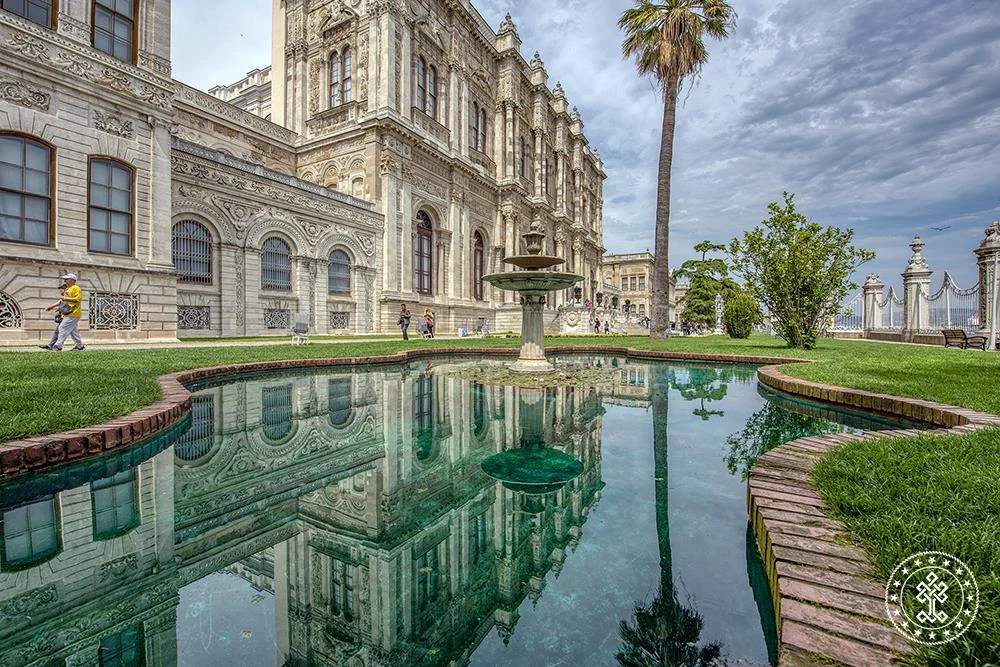
Dolmabahce Palace opens a very different chapter in Istanbul's palace history. Unlike Topkapi Palace, with its courtyards and classical Ottoman layout, Dolmabahce brings 19th-century European court style, Ottoman ceremonial culture and the drama of the Bosphorus into one grand waterfront facade. Its long marble front in Besiktas shows how the late empire wanted to present itself to the modern world.
Construction began under Sultan Abdulmecid in 1843 and was completed in 1856. The aim was not simply to build a more comfortable residence. It was to renew the language of diplomacy, ceremony and imperial representation. That is why Dolmabahce is both a palace and a political stage for the final century of the Ottoman Empire.
Architecture: Baroque, Neoclassical and Ottoman Taste
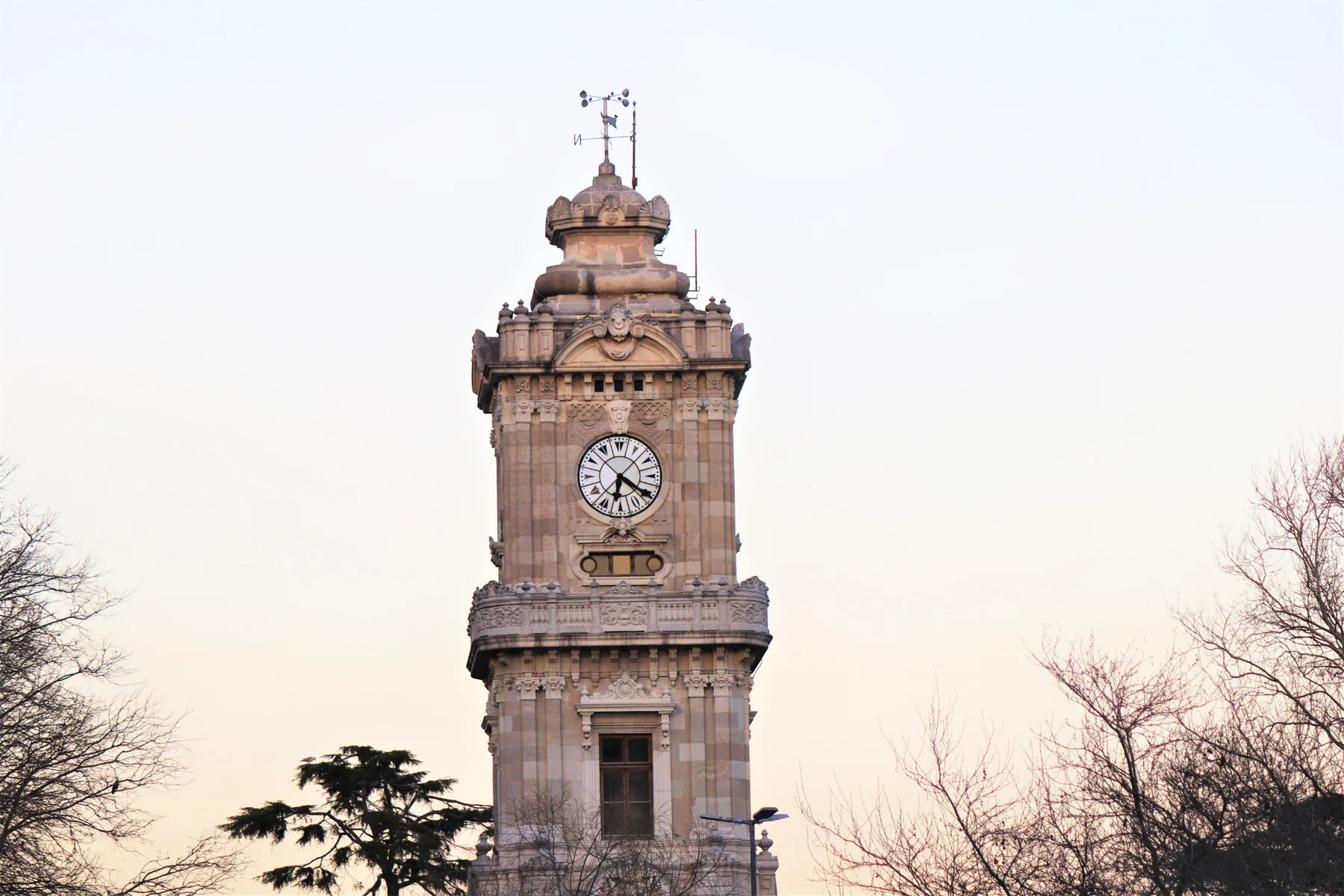
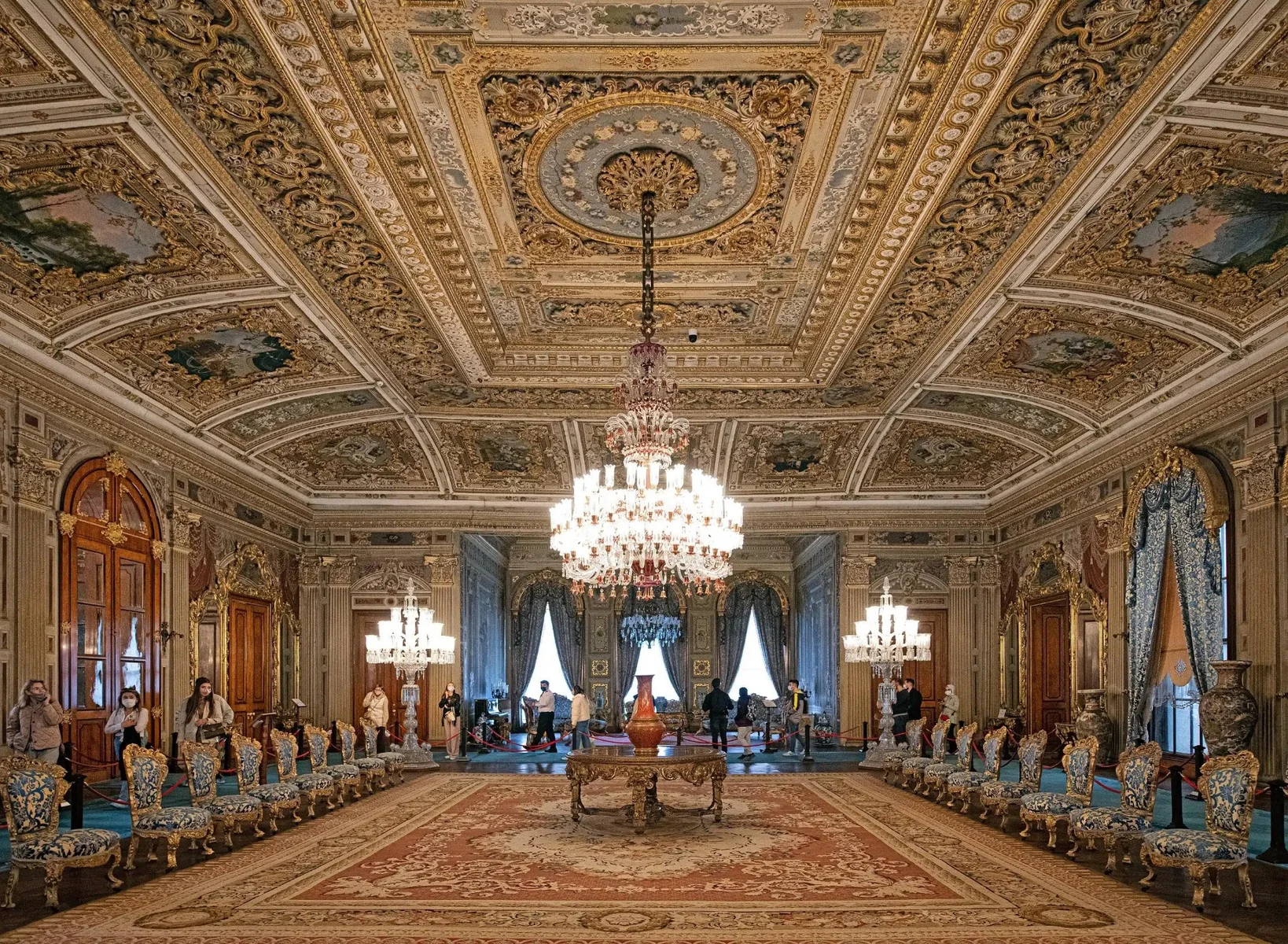
Dolmabahce does not belong to a single style. Baroque, Rococo, Neoclassical and Ottoman elements work together throughout the building. The exterior emphasizes symmetry, columns and the ceremonial sea facade; inside, gold leaf, crystal, Hereke carpets, large mirrors and painted ceilings build a language of power and display.
The palace contains about 285 rooms, 43 halls and 6 baths. Its main sections can be read as the Imperial Mabeyn, the Ceremonial Hall and the Harem. This layout separates official state spaces from the private world of the dynasty.
The Ceremonial Hall, Crystal Staircase and Palace Light
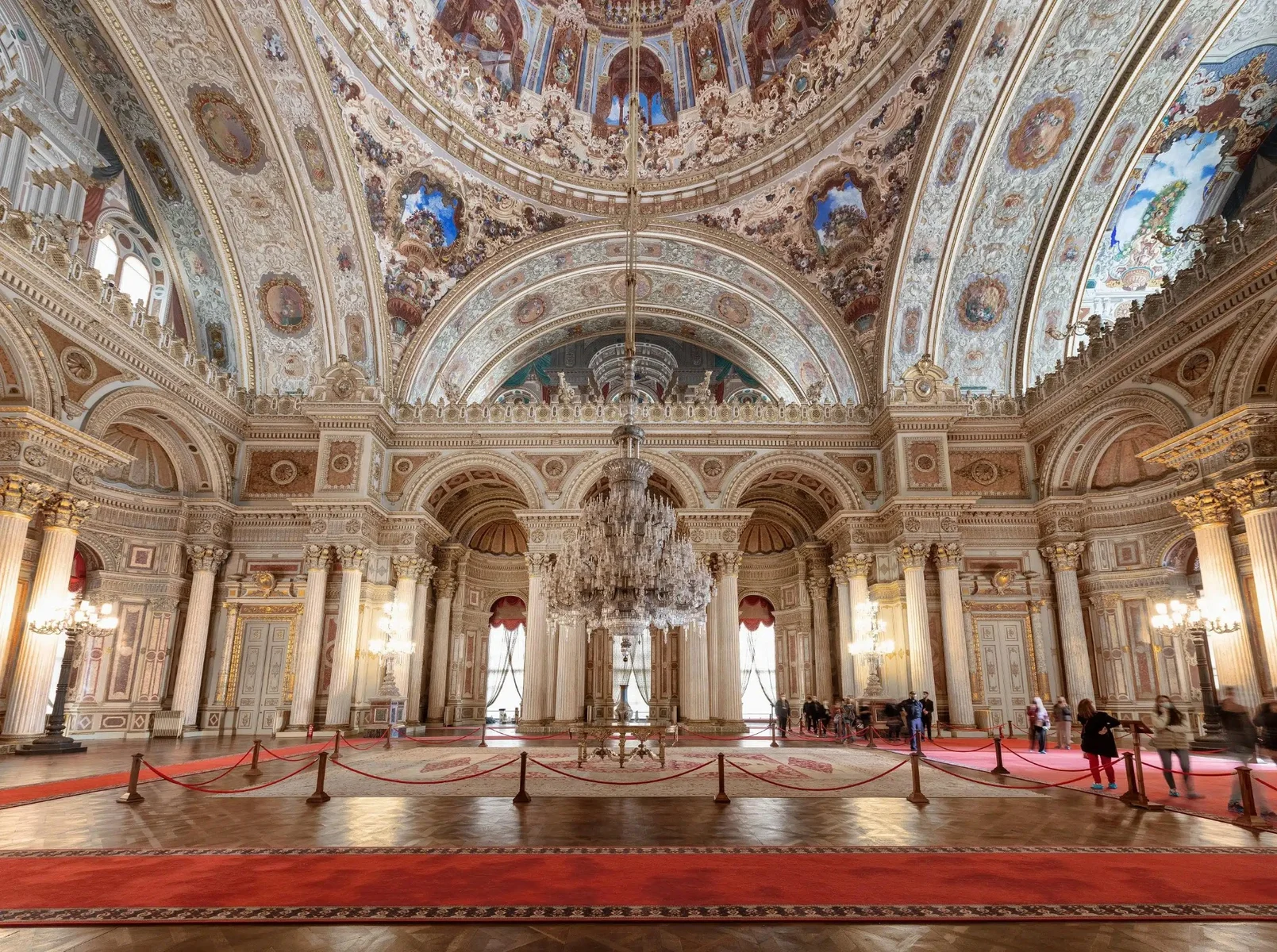
The most impressive room is the Ceremonial Hall, designed for state ceremonies and major receptions. Its dome, open floor and monumental chandelier create one of the grandest interiors in Istanbul. The great Bohemian crystal chandelier weighs about 4.5 tons and has hundreds of lights.
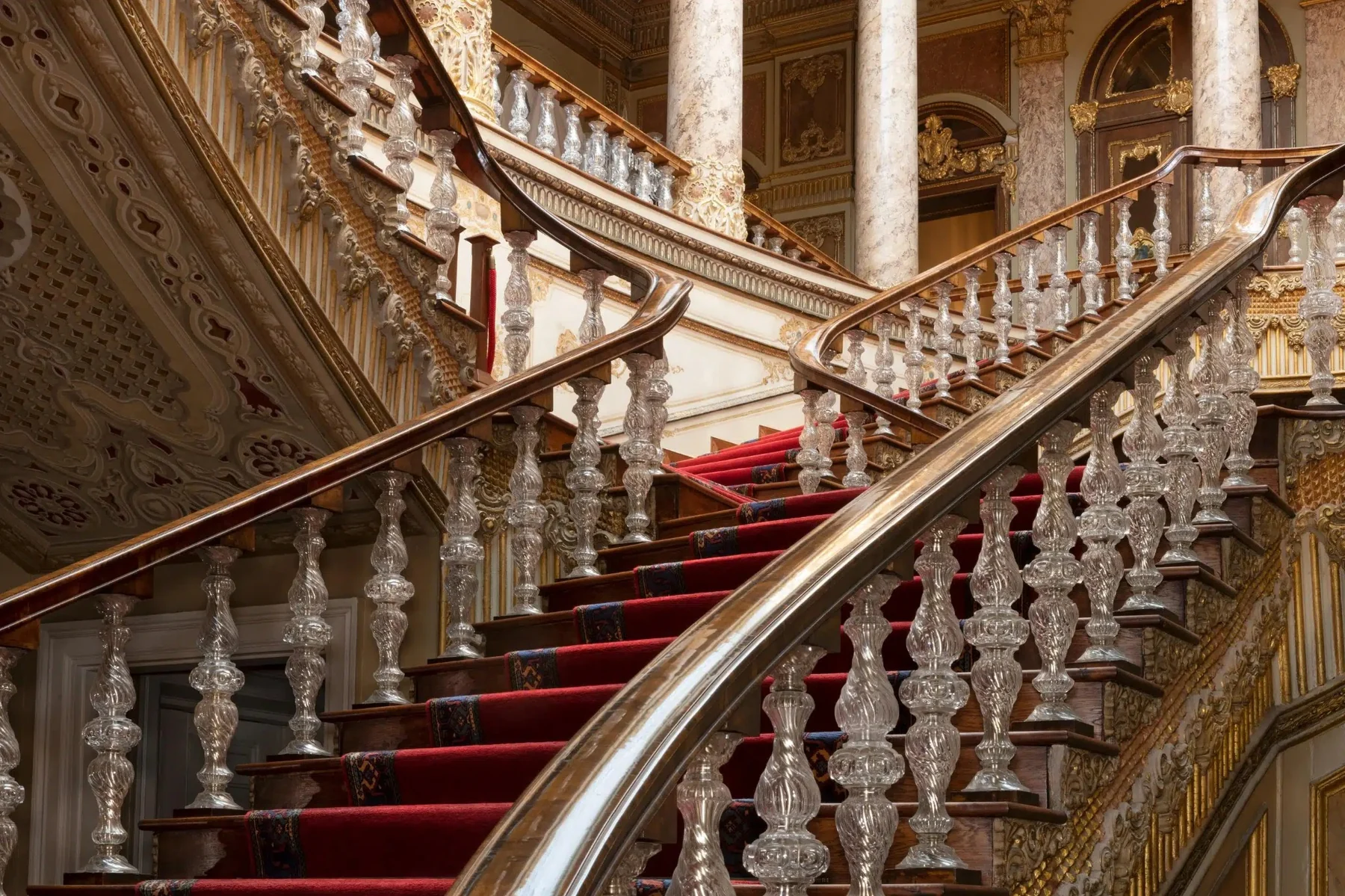
The Crystal Staircase shows the same ambition at a more intimate scale. Built with Baccarat crystal, brass and mahogany, it is not just a passage between floors but an architectural display of craft and light.
Ataturk's Final Days and Republican Memory
Dolmabahce is not only a late Ottoman palace. Mustafa Kemal Ataturk, founder of the Republic of Turkiye, used it during his stays in Istanbul and spent his final days here. He passed away on November 10, 1938, in a room on the second floor. Today that room is preserved with a quiet simplicity that gives the visit a deeply respectful tone.
Tickets and visit rules: According to National Palaces visitor information, Dolmabahce Palace is closed on Mondays. Current ticket categories, foreign visitor prices and combined ticket options should be checked on the official National Palaces ticket page before visiting. Photography rules and visitor flow can vary by section.
Istanbul Highlights Note
Do not rush Dolmabahce. Between the interiors, gardens, Clock Tower and Bosphorus edge, it deserves at least half a day. It also pairs easily with Besiktas, Kabatas, Galataport or Ortakoy.