Audio Guide
Listen to this page
Topkapi Palace: The Legendary Imperial City Where Three Continents Were Ruled
Rising at the peak of Sarayburnu that crowns Istanbul's skyline, against the magnificent blue of the Sea of Marmara, the Bosphorus and the Golden Horn, Topkapi Palace was not merely a ruler's residence, but a global administrative, political and cultural headquarters that changed the flow of the world for centuries. This magnificent complex, whose foundations were laid by Sultan Mehmed the Conqueror on this strategic hill — where the Byzantine acropolis had previously stood — immediately after his conquest of Istanbul in 1453, kept the administrative pulse of the state as the heart of the Ottoman Empire for approximately four centuries.
Bearing the traces of sultans, viziers, scholars and artists who ruled three continents for centuries, the palace — with its walls covering an area of approximately 700,000 square meters, its interconnected courtyards and monumental gates — is almost a "city of empire within the city". Since its establishment, it has been not only a living space, but the holiest focus of power where the diplomacy of East and West was shaped.
The Vision of the Conqueror and the Historical Evolution of the Palace
After the conquest, Sultan Mehmed the Conqueror first had a palace built on the area where today's Istanbul University stands (Eski Saray); however, recognizing the unique position of Sarayburnu for the central administration of the state, he had Yeni Saray-ı Hümayun (Topkapi Palace) built between 1465-1478.
With new pavilions, kiosks, libraries and harem quarters added in each sultan's reign over the centuries, the palace became a living encyclopedia of Ottoman architectural and artistic evolution. Maintaining its role as the brain of the empire until Sultan Abdülmecit moved to Dolmabahçe Palace in the 19th century, the palace, even after losing its status as the center of the sultanate, never lost anything of its grandeur or sanctity.
The Architecture of the Palace and the Hierarchy of Its Courtyards
Unlike the single-block royal palaces of Europe, Topkapi Palace is shaped around four main courtyards, spreading into nature, each serving a unique state protocol. This hierarchy is based on a rule of increasing secrecy and grandeur as one moves from the outside world toward the center:
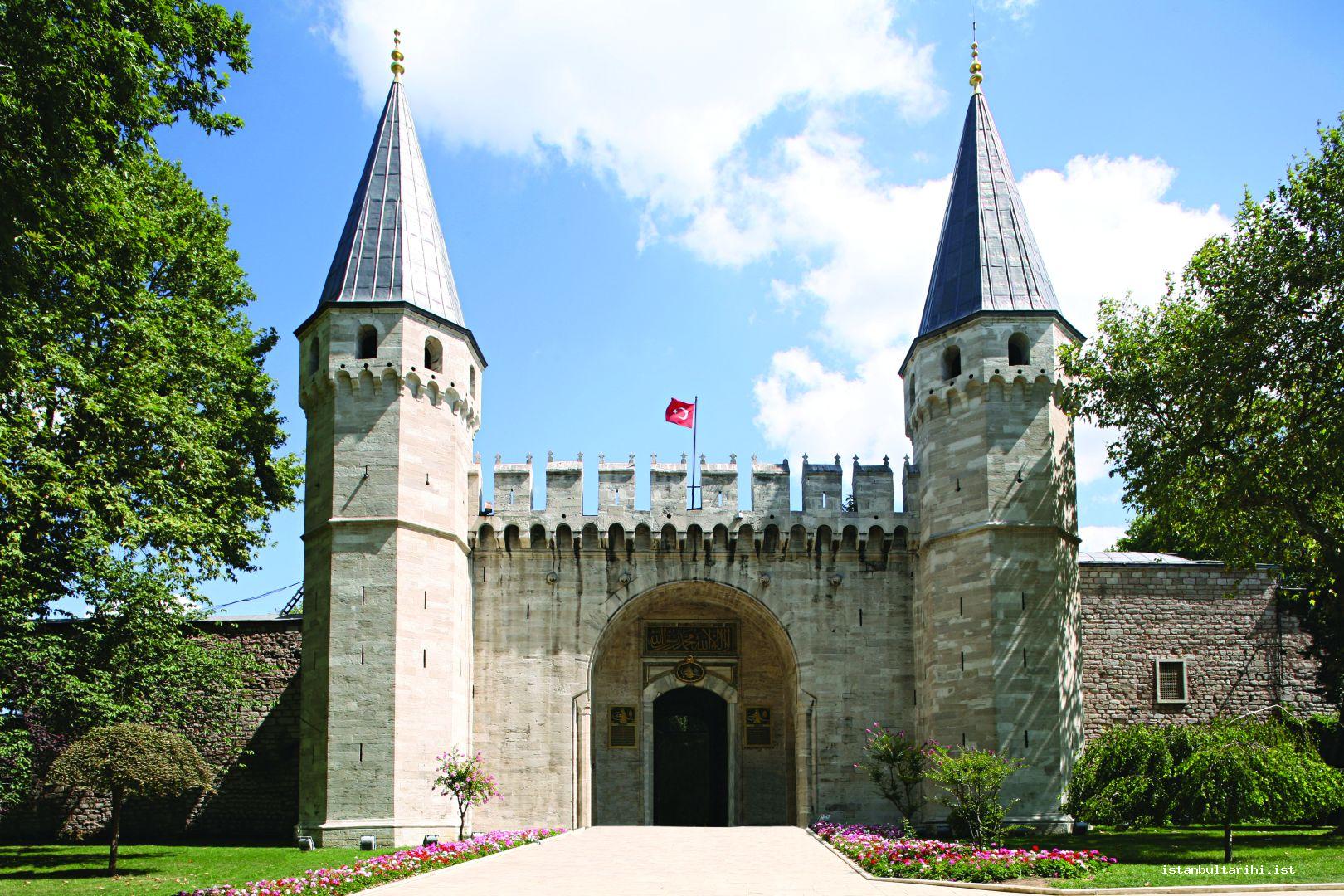
- First Courtyard (Procession Square): This wide area, entered through Bab-ı Hümayun, the palace's outermost gate open to the public, was the center of ceremonies announcing the grandeur and power of the state to the outside world, training scenes of the Janissary Corps, and official applications. It houses the historic Hagia Irene, the oldest church in Istanbul, the hospital, and the Imperial Kitchens that fed the vast Ottoman army.
- Second Courtyard (Divan Square): This is the heart where state affairs were conducted and foreign ambassadors were received. In this square, symbol of governance by justice, stand the Arz Odası where the sultan received ambassadors, and the Divan-ı Hümayun (Kubbelatı) where the fate of the empire was weighed and decided.
- Third Courtyard (Enderun Courtyard): A sacred area completely cut off from the outside world, containing the Enderun Mektebi where the sultan's private life unfolded and the future administrators, commanders and bureaucrats of the state were trained. The Hazine-i Amire and the Chamber of Sacred Relics are here.
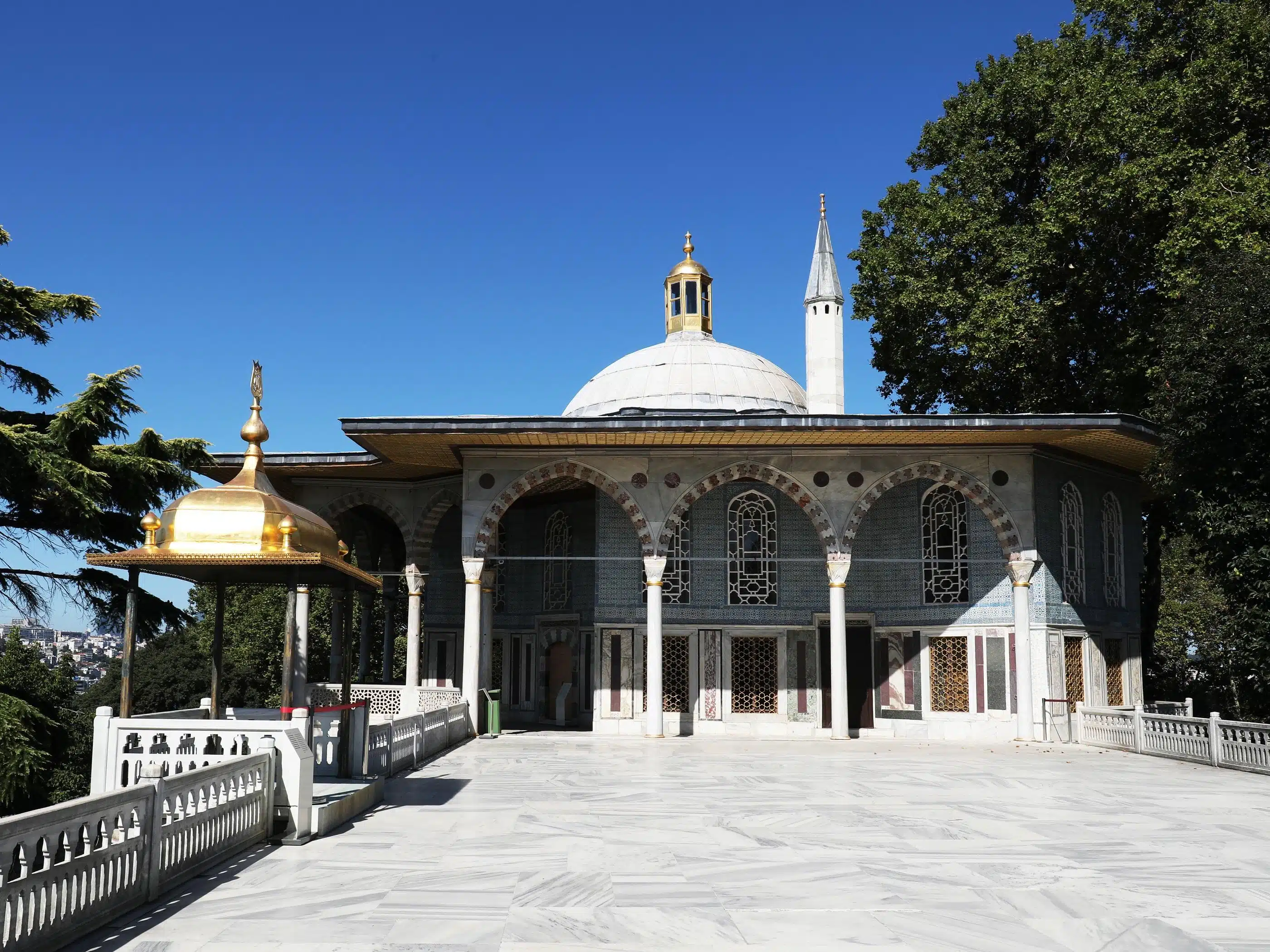
- Fourth Courtyard: Terraces where the Bosphorus and the Golden Horn are laid at one's feet, tulip gardens, and the elegant resting areas of the Revan, Baghdad and Iftariye Kiosks representing the peak of Ottoman woodwork, tile and mother-of-pearl craftsmanship.
The Decision Center of the Empire: Divan-ı Hümayun and Kubbelatı
The Kubbelatı in the second courtyard was the highest executive, administrative and judicial organ of the Ottoman Empire. This hall, where viziers led by the Grand Vizier, military judges and chancellors discussed state affairs, listened to the complaints of the people, and hosted foreign ambassadors, was the heart of the Ottoman justice system.
The "Cihanınıma" window in the hall, from which sultans could secretly observe the meetings from behind a grill above, symbolizes the absolute authority and supervisory mechanism of the state. Decisions were deliberated here, decrees written, and presented to the sultan for final approval.
The Harem: Mystery, Elegance and Palace Life
The Harem, the most curious, most private, and most strictly protected section of the palace, was the private life and residence area of the sultan's mother (Valide Sultan), his wives, favorites, princes, and the palace women trained in state service. Meaning "untouchable, sacred and forbidden", the Harem was not merely a household, but a vast administrative institution with its own hierarchy, schools, treasury and protocol.
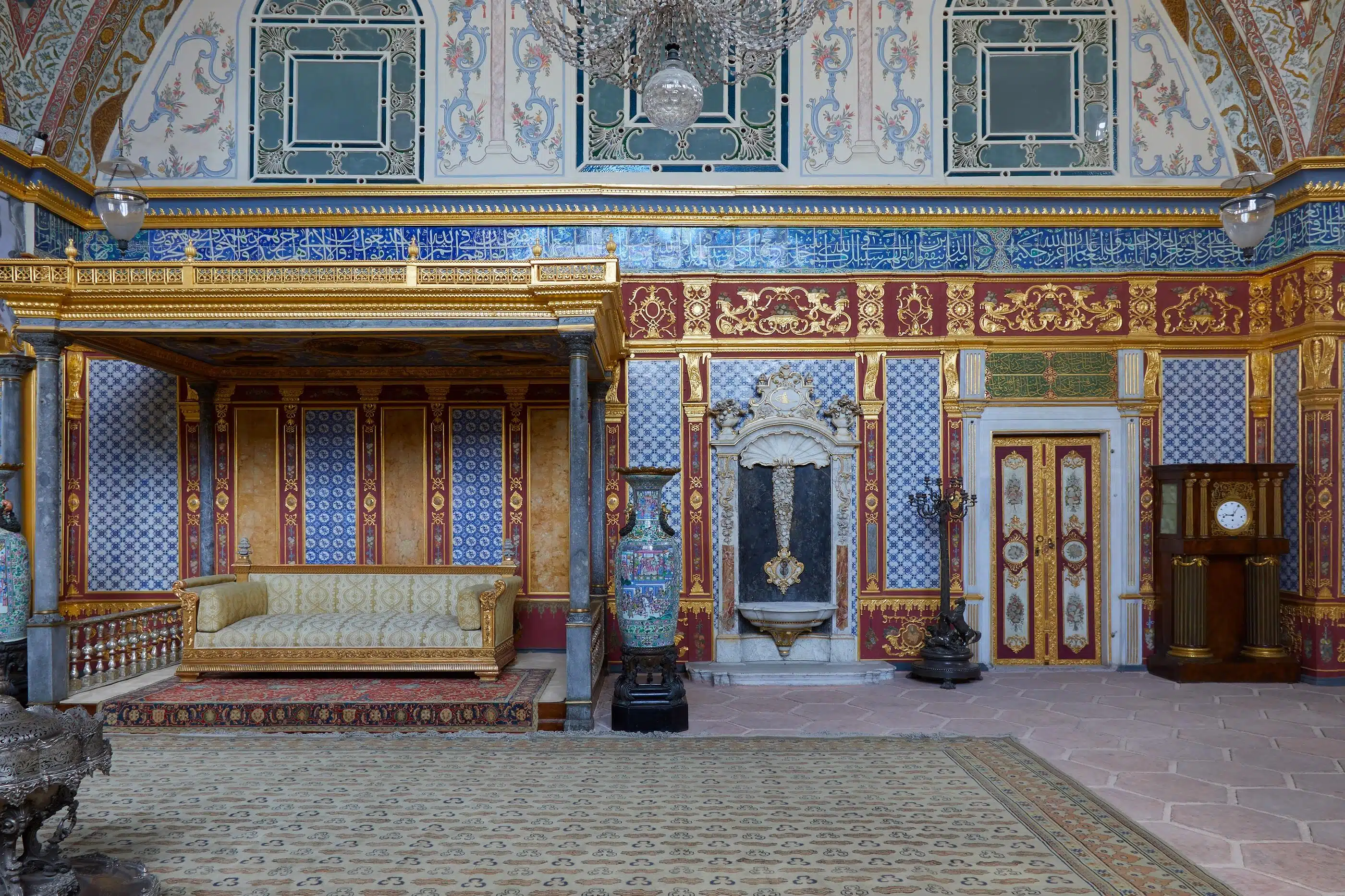
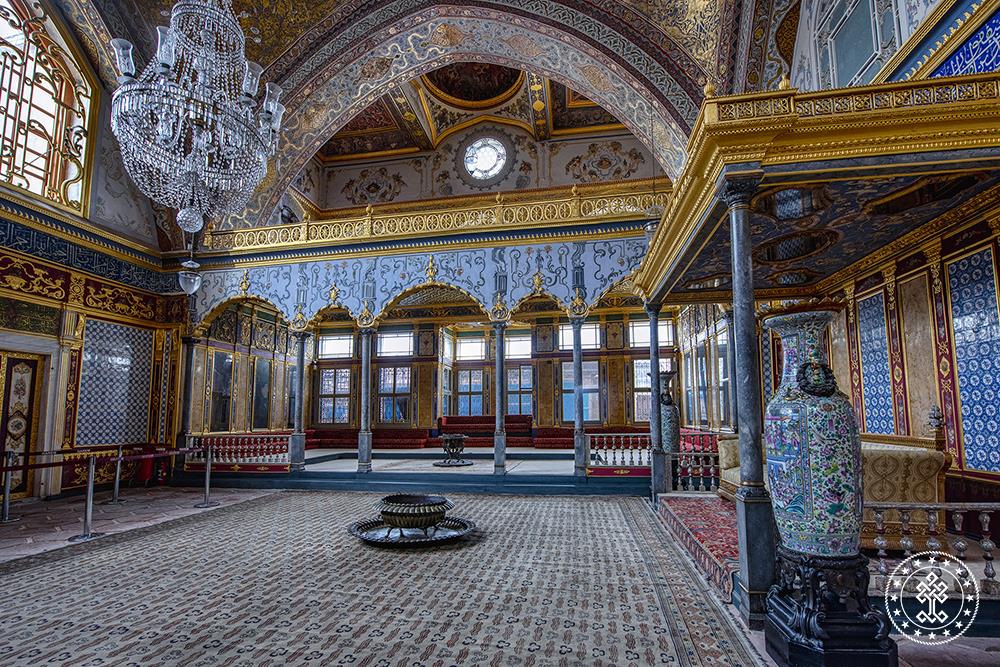
Composed of breathtaking spaces such as the Courtyard of the Black Eunuchs, the Courtyard of the Concubines, the Valide Sultan's Chamber, and the dazzling tiled Private Chamber of Murad III, this structure is a closed world where the continuity of the Ottoman dynasty was ensured, the state's key political marriages were planned, and the most elegant aesthetics of Eastern culture were exhibited.
The Imperial Treasury and the Sacred Relics
The treasury chambers of Topkapi Palace host one of the richest collections of jewels, weapons and art in the world. Among the most famous pieces of this collection, symbolizing the grandeur, wealth and victories of the sultans, are the 86-carat Spoonmaker's Diamond, one of the largest diamonds in the world, gold-plated thrones, the magnificent Topkapi Dagger adorned with emeralds, and ceremonial swords showing the peak of craftsmanship of the era.
Additionally, the palace hosts the Chamber of Sacred Relics, where Sultan Selim I brought the holiest relics of the Islamic world to Istanbul after his Egyptian campaign. The mantle, swords, standard, footprint of Prophet Muhammad and the symbols of the caliphate have been carefully preserved in this sacred place for centuries, accompanied by recitations of the Quran.
Visitor Information and UNESCO Heritage
Inscribed on the UNESCO World Heritage List in 1985, Topkapi Palace is today one of Turkey's most visited and most respected museums. To fully explore the palace's vast collections, magnificent courtyards and Harem quarters, an average of 2 to 3 hours is recommended.
Practical Information:
The palace is open to visitors every day of the week except Tuesdays. It is located in the heart of the Historic Peninsula, within walking distance of the Sultanahmet tram stop. Considering security measures and queues in peak seasons, it is recommended to visit in the morning hours.
Istanbul Highlights VIP Concierge Privilege
At Istanbul Highlights, we offer our guests privileged access to Topkapi Palace and the Harem quarters with private door openings, independent of the crowded ticket queues, in the company of the most competent historian guides. To experience this noble Ottoman heritage in the most comfortable and in-depth way, you can add it to your travel route right away.