Audio Guide
Listen to this page
Sultan Ahmed's Monument at the Heart of Istanbul
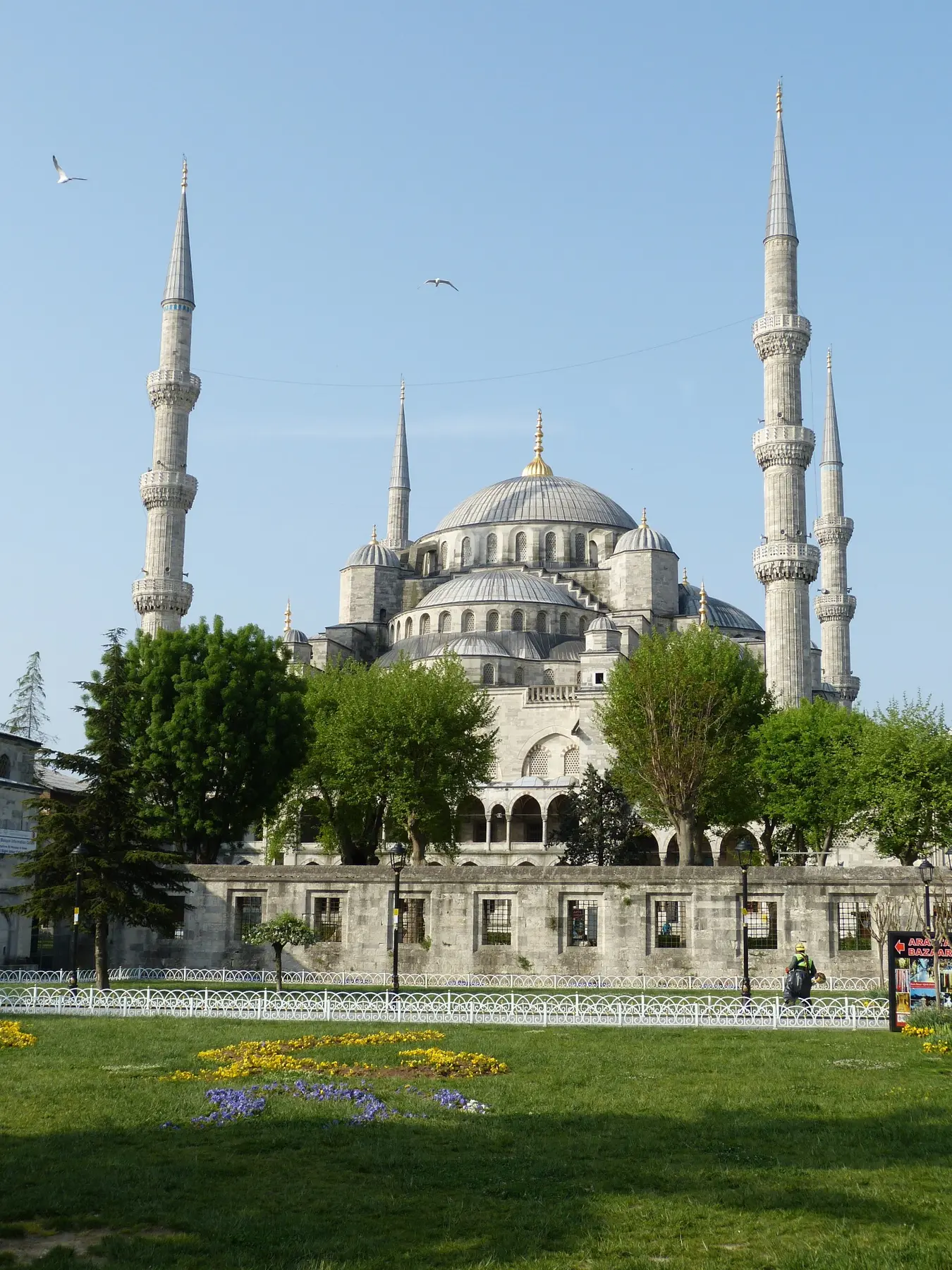
The Sultan Ahmed Mosque was commissioned by Sultan Ahmed and designed by the imperial chief architect Sedefkâr Mehmed Agha. Its foundation was laid in 1609, the mosque opened for worship in 1617, and parts of the surrounding complex were completed by 1620. Facing Hagia Sophia beside the former Hippodrome, it was conceived not simply as a royal monument but as the centre of a new religious and urban ensemble.
The original complex included a royal pavilion, madrasa, primary school, bazaar, public kitchen, hospital, mausoleum, fountains and service buildings. Although some disappeared, the arasta bazaar, madrasa, royal pavilion and tomb still reveal the scale of the foundation. Sultan Ahmed's mausoleum stands northeast of the mosque, close to the square.
The Last Great Statement of Classical Ottoman Architecture
Sedefkâr Mehmed Agha inherited the central-dome tradition refined by Mimar Sinan and gave it a gentler pyramidal silhouette through cascading domes and semi-domes. The main dome is about 23.5 metres across and rises roughly 43 metres above the floor. Four enormous piers, traditionally called 'elephant feet', receive its load through arches and pendentives. Four semi-domes, smaller exedrae and corner domes open the prayer hall outward without breaking its visual unity.
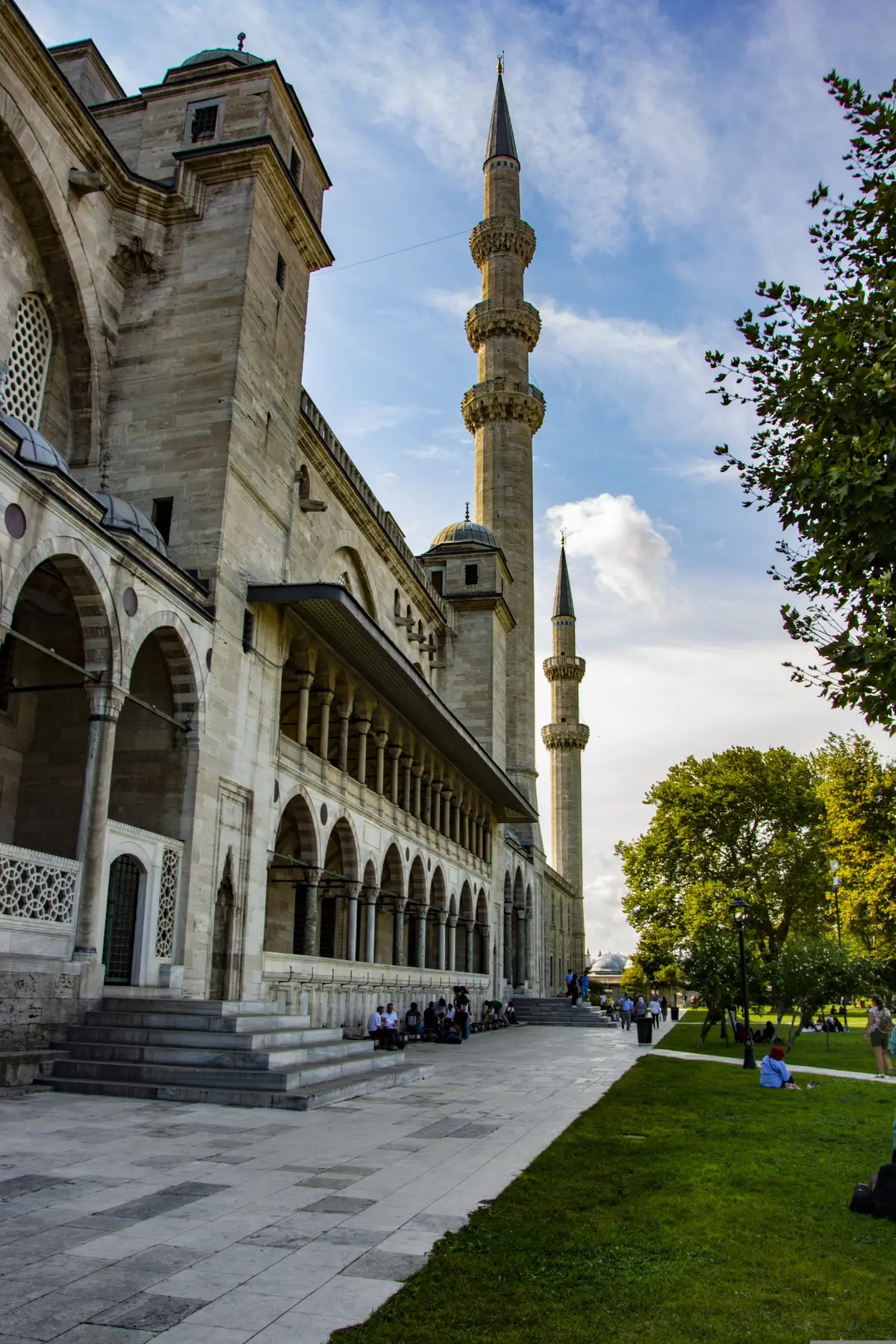
A broad arcaded courtyard and central fountain create a measured transition into the prayer hall. The six minarets were exceptional for an Ottoman imperial mosque: four stand at the prayer hall and two at the outer courtyard. A popular tale claims that the words for 'golden' and 'six' were confused, but no dependable contemporary document confirms this story, so it is better understood as legend.
Iznik Tiles and the Meaning of the Blue Mosque
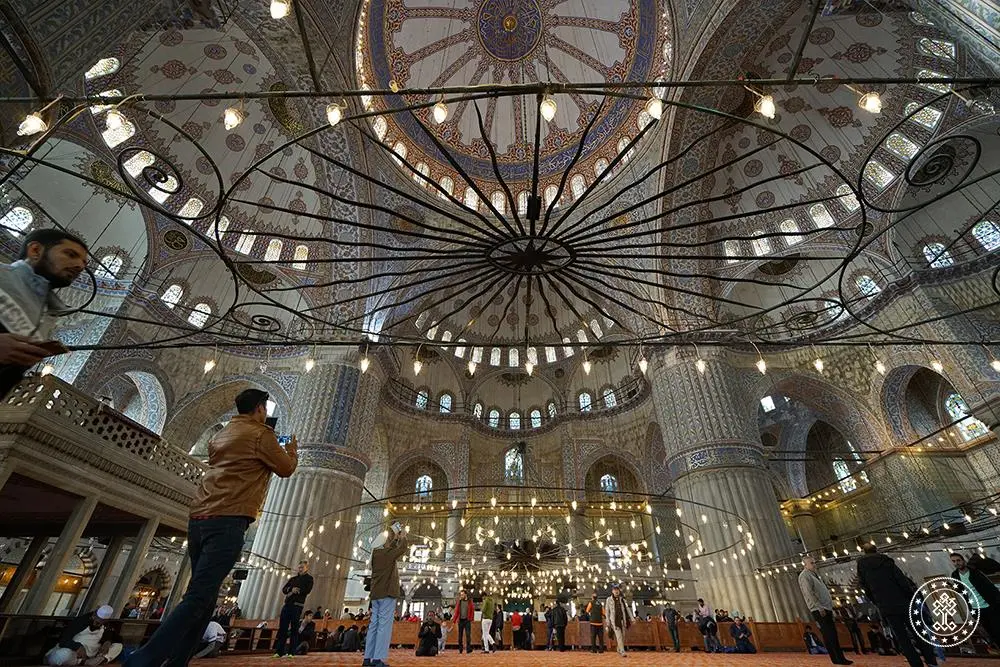
The English name 'Blue Mosque' refers not to the exterior but to the predominantly blue impression created by the Iznik tiles inside. Tens of thousands of tiles cover the lower walls and galleries with tulips, carnations, roses, hyacinths, cypresses and grapevines. Cobalt blue, turquoise and coral red in the earlier panels, followed by changing tones in later batches, document the range and pressures of Iznik production in the early seventeenth century.
Painted ornament takes over above the tiled zones. Daylight enters through many windows and coloured glass, meeting the low rings of lamps that once emphasized the breadth of the prayer hall. The marble mihrab, carved minbar, mother-of-pearl doors and calligraphic panels belong to the same carefully composed interior. What visitors see today also records centuries of repair; this is a living mosque, not an untouched room frozen in 1617.
Royal Pavilion, Külliye and Historic Setting
The royal pavilion and the sultan's loge provided a secure ceremonial route into the mosque. The pavilion is among the earliest important examples of a self-contained imperial residence attached to a mosque. Terraces and outer courts organize the sloping site and make the silhouette visible from the Marmara shore and across the Historic Peninsula.
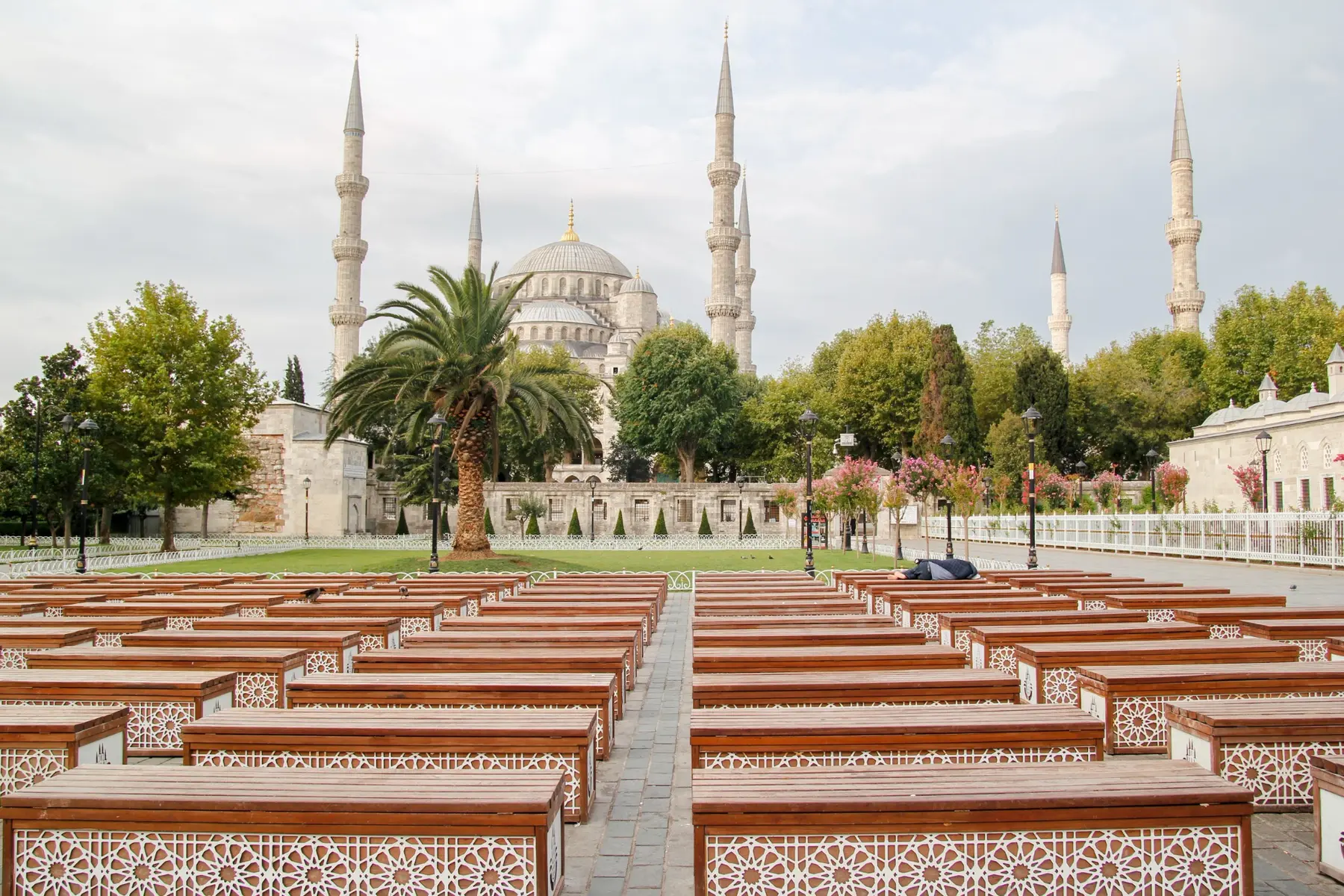
The mosque shares its setting with the Hippodrome monuments, Hagia Sophia, Topkapi Palace and the Basilica Cistern. It forms part of the Historic Areas of Istanbul, inscribed on UNESCO's World Heritage List in 1985. A comprehensive restoration begun in 2017 and completed in 2023 addressed lead roofs, stonework, decoration and structural elements while the mosque continued to function as a place of worship.
Planning Your Visit
Allow 30–45 minutes for a straightforward visit and closer to an hour if you want to study the courtyard, tile panels, calligraphy and surviving parts of the complex. Early morning and the intervals between prayers are normally calmer. Tourist access can be restricted for longer around the Friday noon prayer.
The easiest approach is a short walk from Sultanahmet station on the T1 Kabataş–Bağcılar tram line. From the Asian side, take a ferry to Eminönü or Karaköy and connect to T1. Vehicle access around the historic square is restricted, so taxis may have to leave passengers a short walk away.
Visitor Information and Rules
- Admission: Entry for an ordinary visit is free; no standard ticket or reservation is required.
- Hours: The mosque opens daily, but tourist/non-worshipper access pauses for the five daily prayers. On Fridays, tourist entry normally begins after the congregational noon prayer. Religious events and security arrangements can change the schedule, so check the same-day notice before travelling.
- Dress: Shoulders and knees must be covered, and women cover their hair. Entrance provisions can change; arriving in suitable clothing with your own scarf is the simplest option.
- Shoes and conduct: Remove shoes before entering the carpeted prayer hall. Keep quiet and do not cross directly in front of worshippers. Follow staff instructions concerning flash, tripods and professional equipment. Food and drink should not be taken inside.
- Accessibility: Step-free approaches to the courtyard are available, but arrangements inside a historic working mosque may change. Ask entrance staff for the current wheelchair route or assistance.