Audio Guide
Listen to this page
From Genoese Colony to Istanbul Icon
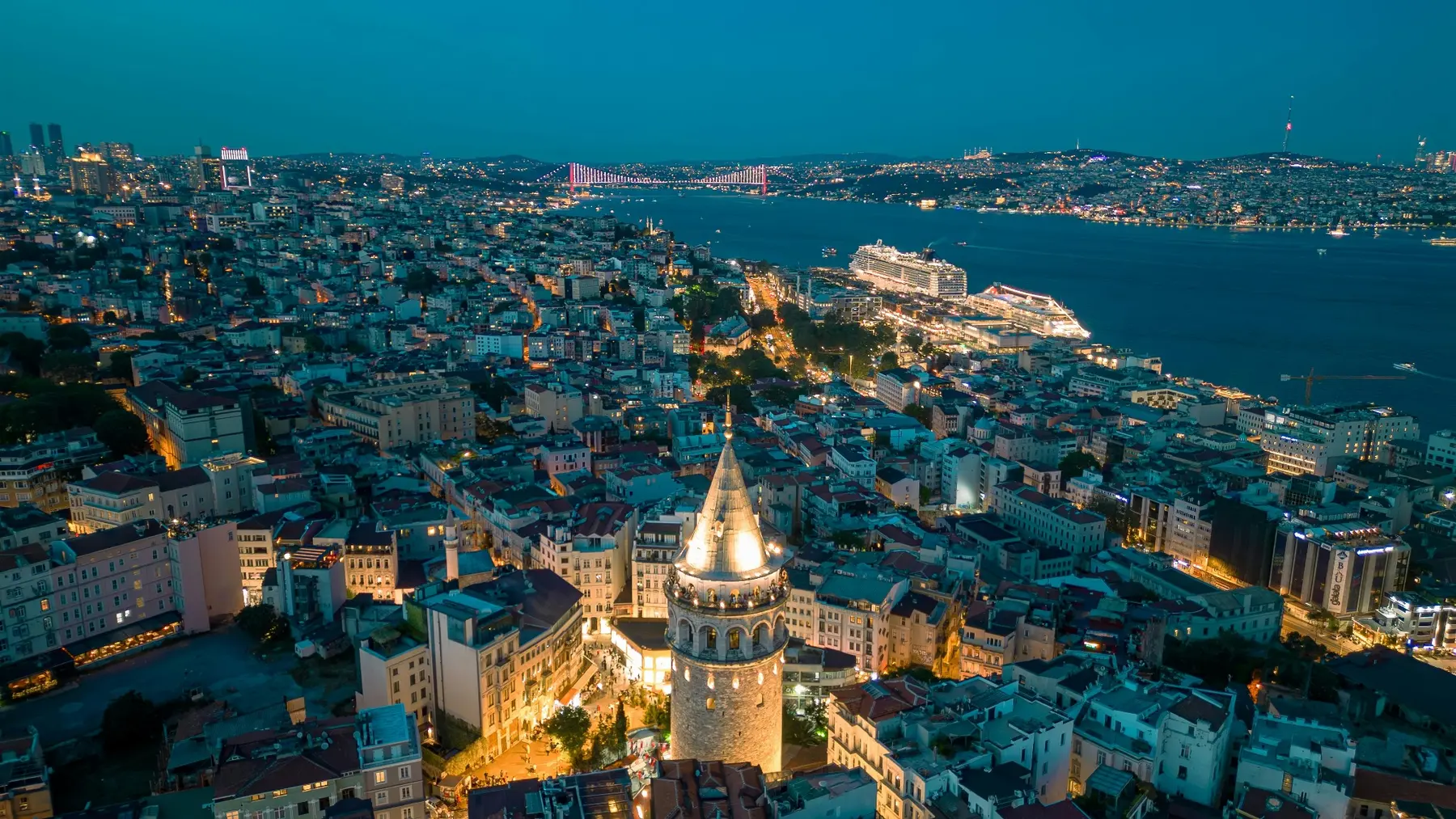
The present Galata Tower rose as part of the fortifications of the Genoese settlement in Galata in the fourteenth century. Earlier towers stood nearby, but the stone body generally associated with the landmark dates to 1348–49.
Galata was a busy port neighbourhood where foreign merchants, sailors and craftspeople worked beside the Golden Horn. The tower was the most visible element of the colony's defensive and watch system, marking a boundary between different urban worlds.
Fire Watch, Observation and the Hezarfen Story
Under Ottoman rule the tower served several purposes, including prison, storage and, most importantly, fire watch. In a city built largely of timber, seeing smoke from a high vantage point was essential to responding to fires.
The tower is also tied to the famous story of Hezarfen Ahmed Celebi flying towards Uskudar. The details remain debated, but the story explains why Galata Tower has occupied such a strong place in Istanbul's urban imagination.
Stone, Conical Roof and Layers of Repair
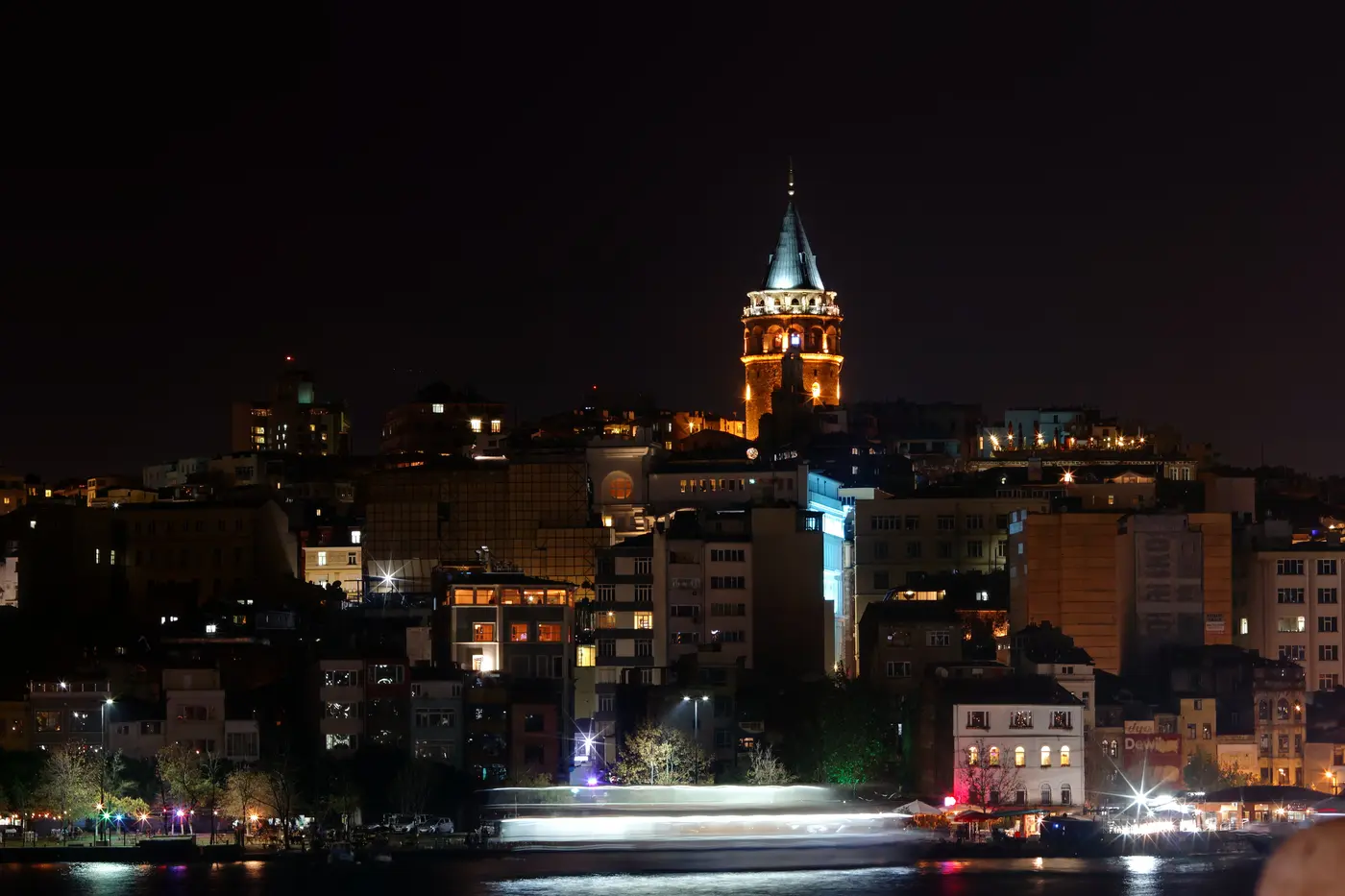
The cylindrical shaft, projecting observation level and conical roof bring together layers from different periods. Earthquakes and fires damaged parts of the building, while eighteenth- and nineteenth-century repairs altered the roof, facade and interior circulation.
The current route combines exhibition spaces with the observation terrace. The tower is more rewarding when treated as a place from which to read Galata's streets and Istanbul's geography, not simply as a backdrop for a photograph.
A Neighbourhood Walk at the Foot of the Tower
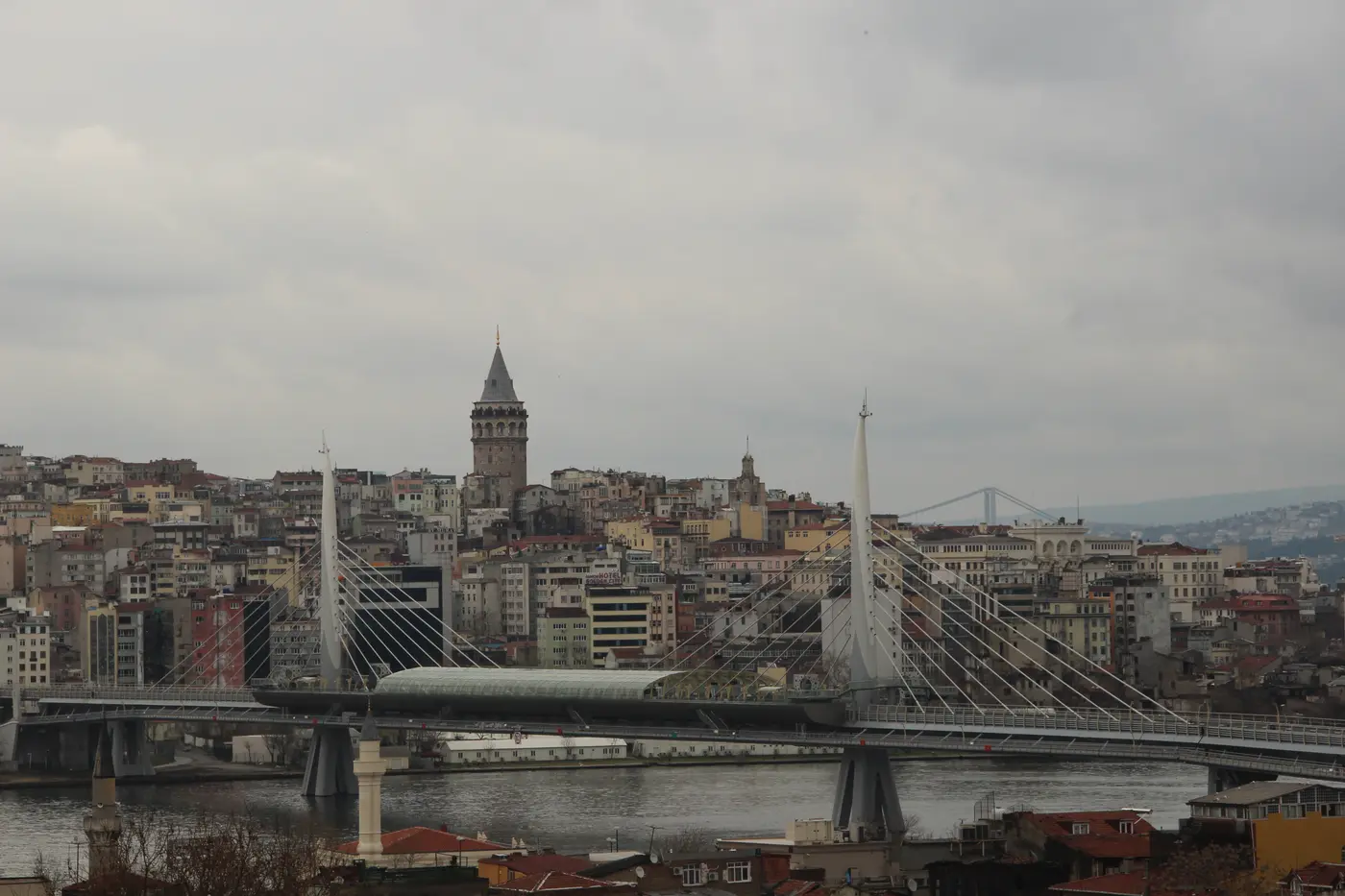
The visit continues naturally through the streets around the monument. From Bereketzade to Sishane and down via the Kamondo Steps to Karakoy, churches, hans, coffee shops, design stores and small galleries appear within a compact walk.
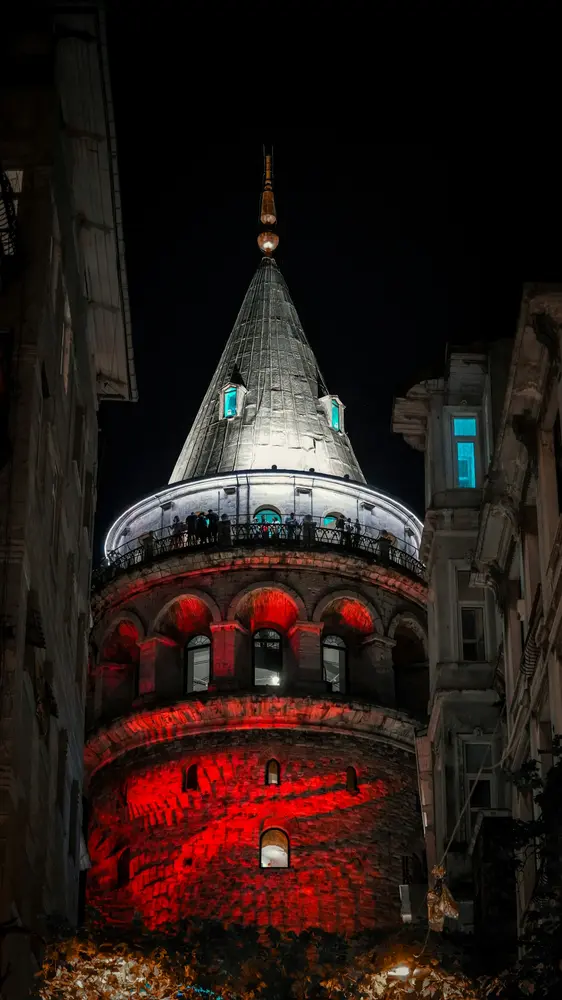
At sunset the stone facade changes colour, but the terrace deserves time at every hour. Look separately towards the Golden Horn, the mouth of the Bosphorus and the domes of the Historic Peninsula rather than trying to absorb the panorama in one glance.
Visitor Information
- Location: Bereketzade, Beyoglu, between Sishane and Karakoy.
- Getting there: Reach it via M2 Sishane, T1 Karakoy or the Tunel connection; the final walk is uphill.
- Time: Allow 1–2 hours for the tower and terrace, with extra time for the surrounding streets.
- Tickets: Check the official museum notice for current admission fees and hours.
- Note: The terrace is narrow and can be crowded, especially around sunset.