Audio Guide
Listen to this page
The Birth of Eyup as a Spiritual Centre
Eyup Sultan Mosque grew around the tomb believed to belong to Abu Ayyub al-Ansari, a companion and standard-bearer of the Prophet who is said to have died here during the early sieges of Constantinople. The discovery of the tomb in the reign of Mehmed II turned the area into one of Ottoman Istanbul's most important spiritual centres.
The present mosque was rebuilt at the end of the eighteenth century under Sultan Selim III. Earlier layers remain legible around the tomb, the courtyard and the cemetery slopes.
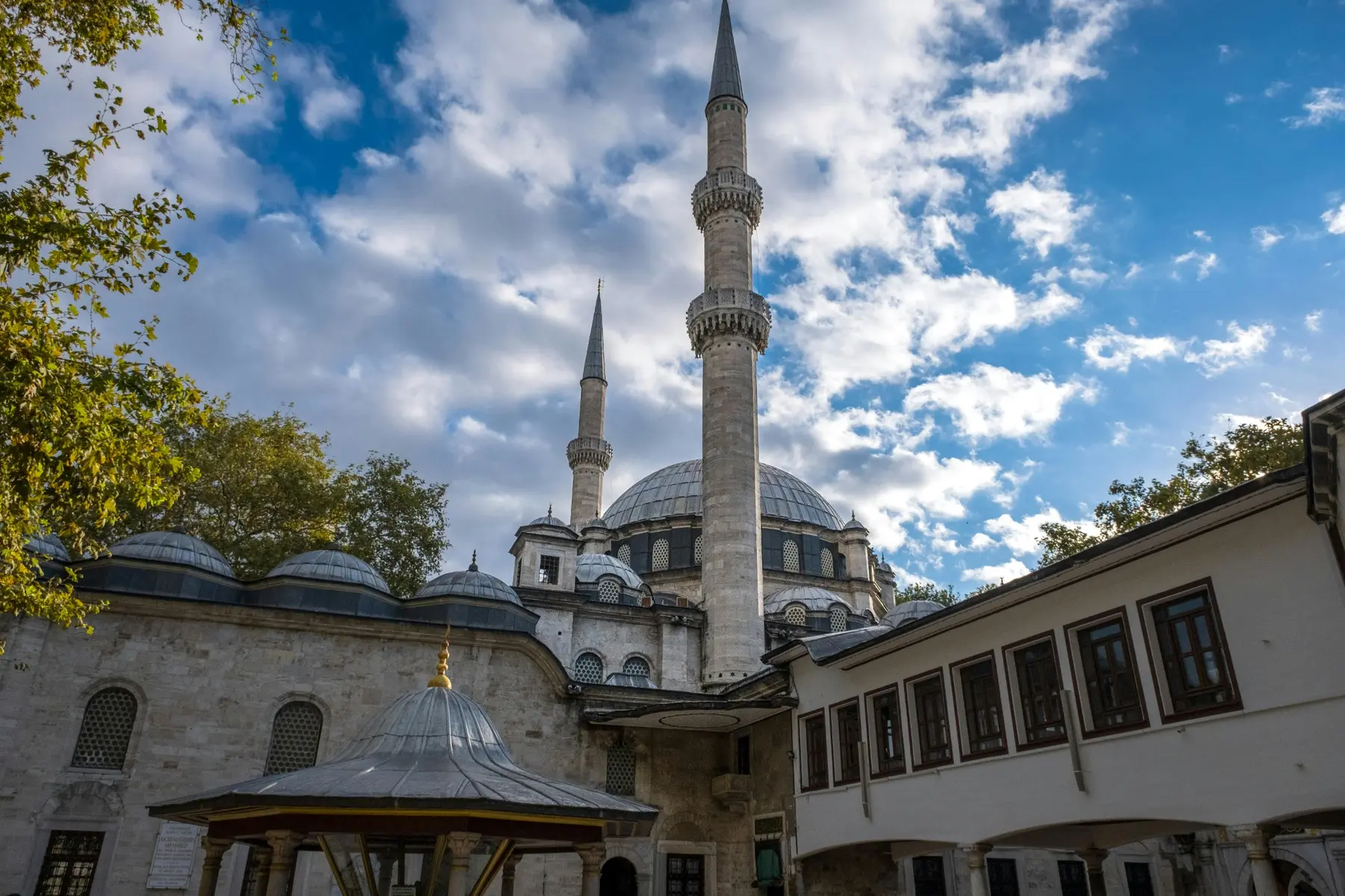
Tomb, Courtyard and Complex
The tomb at the centre of the complex shapes the rhythm of the visit. Iznik tiles, a silver grille, calligraphy and decorated doors show the care given to sacred interiors. The fountain, plane trees and gravestones in the courtyard make the site much more than a single prayer hall.
The path towards Pierre Loti, the cemeteries and the Golden Horn views are part of the wider experience. Prayer, quiet observation, architecture and walking come together in one route.
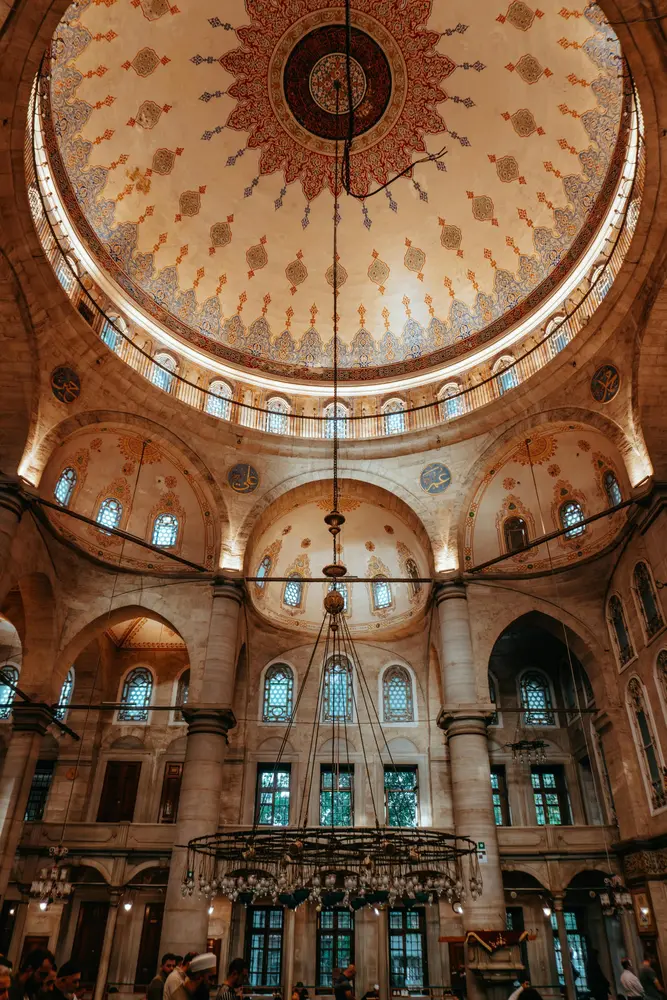
Ottoman Ceremonies and Living Tradition
Eyup Sultan is also associated with the Ottoman sword-girding ceremonies. These rites presented the ruler not only as a political sovereign but also as a guardian of Istanbul's spiritual order.
The mosque and tomb are especially busy on Fridays, religious nights, Ramadan evenings and holidays. This living atmosphere differs from a museum; visitors and worshippers share the same space and need to move with care.
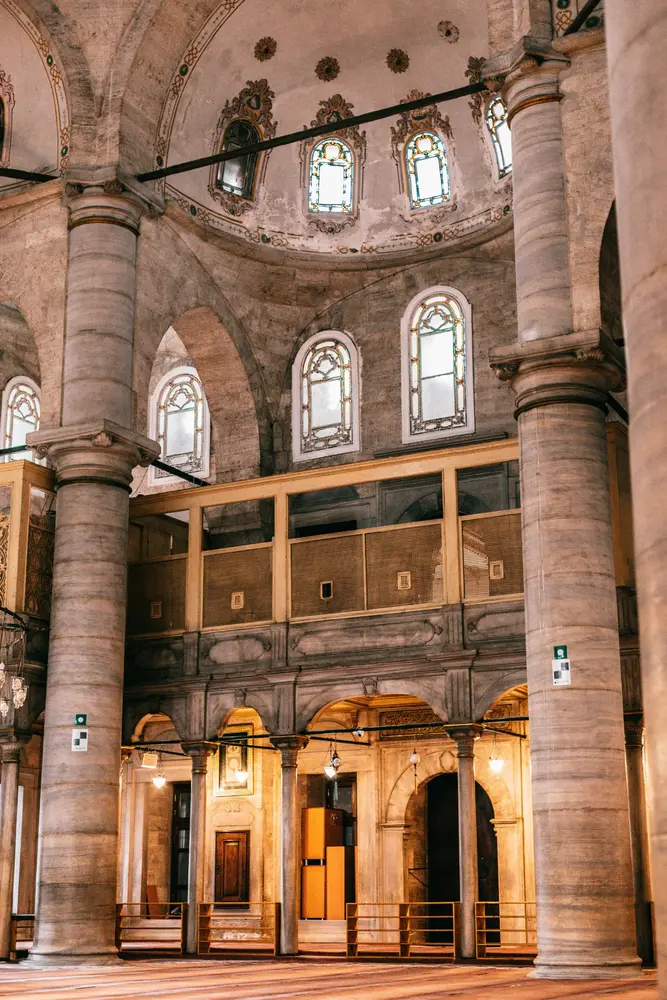
A Golden Horn Route
Eyup Sultan works naturally with Miniaturk, the Golden Horn waterfront and Pierre Loti. Approaching by ferry reveals how the minarets and cemetery slopes meet the water and the hills.
Lokum shops, coffeehouses and old cemetery streets continue the walk outside the complex. The area is best understood as a layer of Istanbul where prayer, neighbourhood life and landscape remain connected.
Visitor Information
- Location: Eyupsultan, on the Golden Horn.
- Getting there: Use ferries or buses from Eminonu and Uskudar; combine it with Miniaturk and Pierre Loti.
- Time: Allow 45–90 minutes for the mosque, tomb and courtyard, longer for the hillside.
- Entry: Free; no ticket is required.
- Etiquette: Cover shoulders and knees, women should cover their hair, and avoid photography during prayer.