Audio Guide
Listen to this page
Hagia Sophia: An Eternal Monument Defying the Centuries
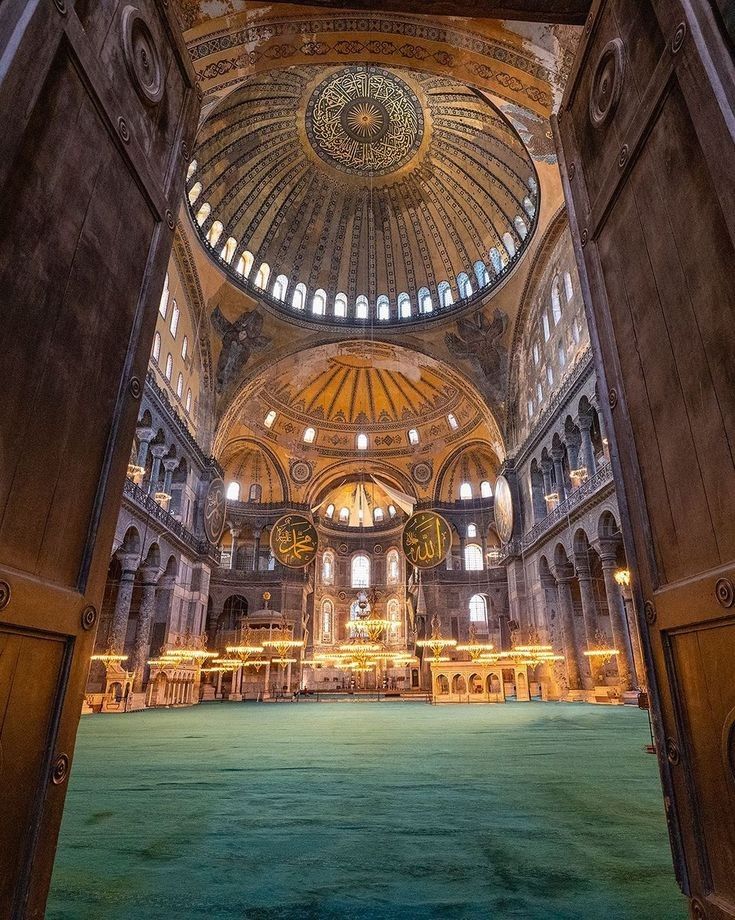
Dominating Istanbul's skyline and considered the pinnacle of two great empires and world civilization history, Hagia Sophia is not merely a structure of stone, brick and marble — it is the living witness of humanity's greatest cultural and architectural transformations. One of the most fascinating symbols not only of Turkey but of the entire Mediterranean basin, this magnificent temple welcomes its visitors with a mystical and indescribable grandeur at first glance.
From Rome to Byzantium: The Birth of Holy Wisdom
Meaning "Holy Wisdom" in Greek, Hagia Sophia rises at the very heart of the Historic Peninsula, which served as the headquarters of empires for centuries. The structure standing today is the third Hagia Sophia built on the same geography; the first churches were completely destroyed in rebellions and great fires during the turbulent periods of history.
The construction process, initiated in 537 AD by order of Justinian I, one of the most powerful rulers of the Eastern Roman Empire, pushed the engineering limits of the ancient world. The genius architects of the era, Anthemius of Tralles and Isidore of Miletus, completed this colossal cathedral with the labor of thousands of workers in what could be considered a short time. It is said that on the day of its completion, Justinianus shouted "Solomon, I have surpassed thee!" referring to the legendary Temple of Solomon in Jerusalem. Holding the title of the largest cathedral in the Christian world for centuries, the structure blended the grandeur of Rome with the esoteric art of the Eastern Roman Empire.
1453 and the Ottoman Spirit: Mark of the Conquest
Hagia Sophia's fate entered a new era on May 29, 1453, when Sultan Mehmed the Conqueror took Istanbul. Heading straight to Hagia Sophia upon entering the city, the Conqueror felt deep sorrow upon seeing the worn and abandoned state of the structure, and immediately ordered its protection and conversion into a mosque. With the recitation of the first adhan, the structure became one of the greatest symbols of Turkish-Islamic civilization.
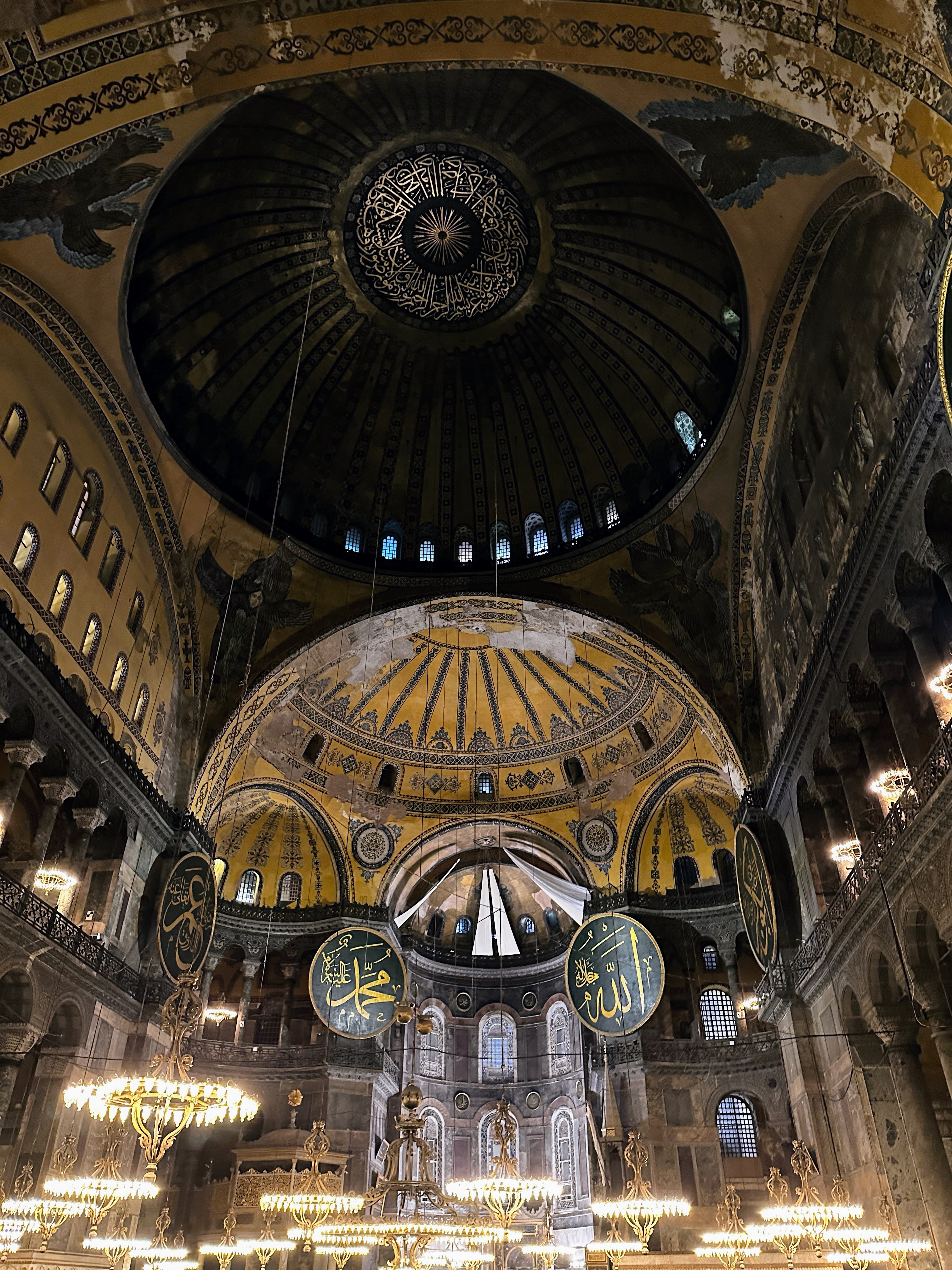
During the Ottoman period, Hagia Sophia was revived with the finest touches of Islamic art. The four elegant minarets added around the structure (works of Fatih Sultan Mehmet, Bayezid II, and Mimar Sinan), each reflecting the aesthetic understanding of the period, changed the skyline of Istanbul forever. Added to the interior were a magnificent mihrab indicating the qibla direction, a marble minbar where sultans listened to sermons, mahfils where muezzins made their voices heard, and enormous circular panels (İsm-i Celâl, İsm-i Nebî and Çar-ı Yâr-i Güzîn) from the brush of Kazasker Mustafa İzzet Efendi, one of the geniuses of Ottoman calligraphy, considered among the world's largest works of calligraphic art. Byzantine mosaic grandeur and Ottoman majestic calligraphy achieved a literally flawless harmony under the roof of Hagia Sophia.
An Architectural Revolution: The Dome Suspended in the Sky
The most fundamental element that wrote Hagia Sophia into the record books of architectural history is its gigantic main dome — an engineering achievement that could be called impossible for its time. Standing approximately 55.6 meters above the ground and with a diameter of 31 meters, this giant dome was almost a challenge to gravity for the architects of the era.
Architects Anthemius and Isidore used spherical triangular transition elements called "pendentives" for the first time at this scale in the world to carry the enormous weight of the dome. In this way, the gigantic circle sitting on a square base distributed the load perfectly to the columns and arches. Forty arched windows arranged around the dome create such an optical illusion with the sunlight filtering in that the giant dome feels as if suspended in the air not by stone and brick but as if hung from the sky by invisible ropes. The interior of the structure is covered with green Thessalian marbles, red Egyptian granites, monolithic columns, and gold-leaf dazzling mosaics collected from ancient Roman temples.
Mysterious Details and Memory of Hagia Sophia
The layers brought by millennia have turned Hagia Sophia into not just a place of worship but also a living museum. Many legendary and historical details await discovery within the structure:
- Imperial Gate and Omphalion: It is said that the enormous wooden door opening from the narthex of the structure, reserved for the passage of Byzantine emperors, was made from the timber of Noah's Ark. Inside, the circular floor area adorned with colorful stones where Byzantine emperors were crowned, Omphalion, is located.
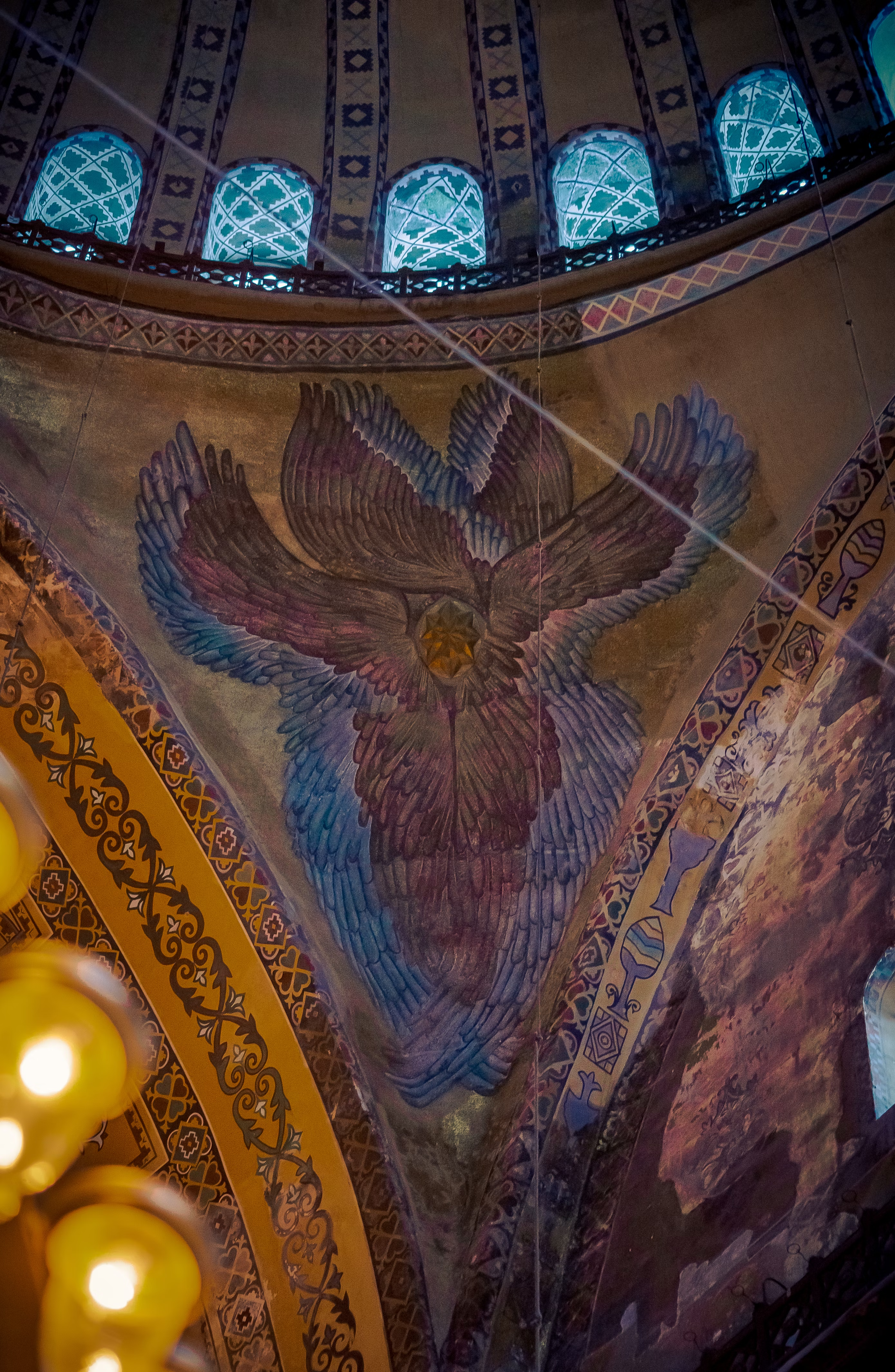
- History of Mosaics: During the Ottoman period, figurative depictions were preserved by plastering over without damaging the stone, and they were brought to light during restorations in the Republican era. The mosaic of Emperor Leo kneeling above the Imperial Gate, the magnificent Virgin Mary and Jesus figure in the apse, and the angel depictions on the sides of the apse are masterpieces of art history.
- Wishing Column (Sweating Column): This column, one of the northwestern columns, which remains slightly moist due to a hole in its marble surface, is a wishing point believed to be healing among the people. Visitors put their fingers into this hole and make a full turn; those whose fingers come out moist believe their wishes will come true.
- Viking Inscriptions: Even the ancient Scandinavian runic alphabet carvings thought to have been scratched by one of the Varangian Guards who served in the Byzantine palace in the 9th and 10th centuries AD on the marble balustrades in the upper gallery are proof of how broad the international history network of the structure is.
Modern Era and Visitor's Guide
Gaining museum status through the vision of Gazi Mustafa Kemal Atatürk, founder of the Republic of Turkey, and with the decision of the Council of Ministers, Hagia Sophia has become a common meeting point for history and art enthusiasts from all over the world. In July 2020, it was returned to its original function and gained mosque status; today, it continues to host millions of visitors both as an active place of worship and as the most valuable crown of the UNESCO World Heritage List.
Visiting Hours and Rules:
Hagia Sophia is open for visits every day as it serves as an active place of worship (mosque); however, tourist visits are briefly interrupted during the five daily prayer times. Visitors are expected to wear modest clothing covering shoulders and knees, women to cover their heads (headscarves are provided at the entrance), and to show silence towards worshippers. While the ground floor of the mosque, which is in the status of a place of worship, can be visited free of charge, the richly mosaiced upper gallery area, where you can closely examine the historical and architectural details of the structure, can be visited with a special paid ticket.
Istanbul Highlights VIP Concierge Privilege
At Istanbul Highlights, we offer our guests privileged access with expert historian guides, private door openings, and skip-the-line entry — independent of peak hours. To experience this magnificent heritage of Istanbul in the most comfortable way, you can examine the details of the venue and add it to your personal travel route right away.